
 (77 Ratings & Reviews)
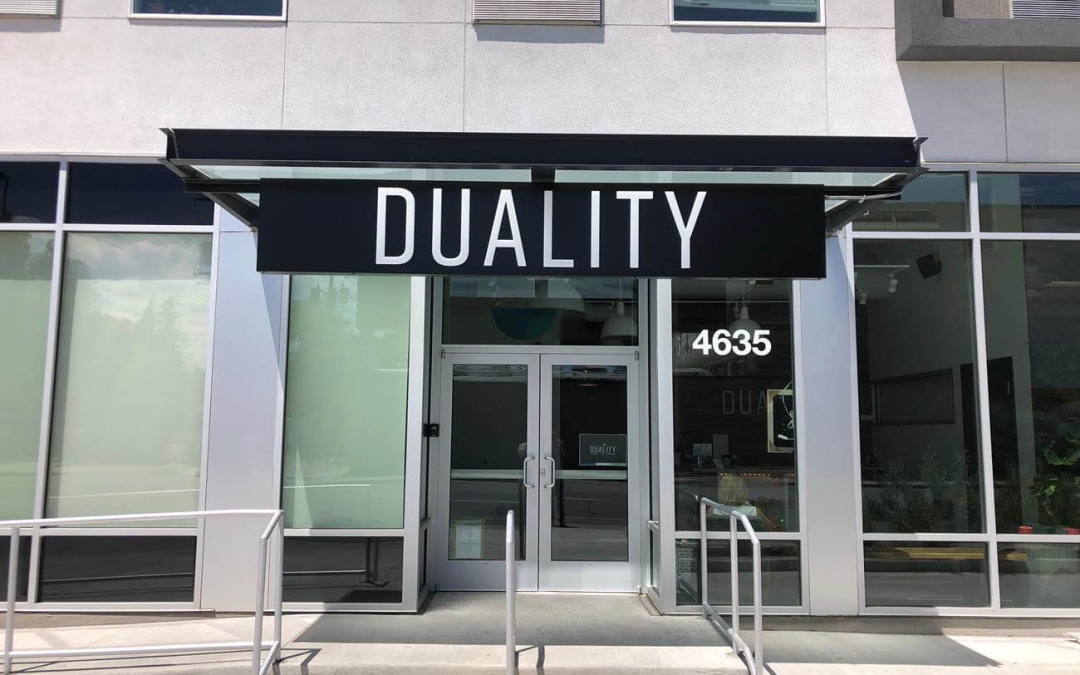
Retail storefront signs in Denver are exterior and entrance-facing displays that identify your business, communicate your brand, and attract walk-in customers from the sidewalk, street, or parking area.
In a city where foot traffic patterns vary block by block, from the gallery-dense stretch of RiNo to the weekend crowds on South Broadway, the right storefront sign is often the single most powerful marketing tool a Denver retailer has. Done well, it converts every passerby into a potential customer without any ongoing ad spend. Done poorly, it lets that traffic walk past without ever noticing you exist.
At Vision Visual Signs, we’ve designed and installed retail signage across Denver’s neighborhoods for years. What we’ve learned is that the signs that consistently drive foot traffic share a handful of common principles, and this guide walks through all of them.
Why Storefront Signage Is Your Highest-ROI Marketing Channel in Denver
Denver’s retail landscape rewards visibility. Whether you’re operating on Colfax, in Cherry Creek North, or along the pedestrian-friendly corridors of Highland’s 32nd Avenue, the volume of foot and vehicle traffic passing your storefront every day represents a built-in audience most digital campaigns can’t match.
Storefront sign, a permanent, exterior-facing display that communicates a business’s identity, offerings, or promotions to people in the physical vicinity of the location.
Unlike social ads or email campaigns, a well-executed retail storefront sign works continuously. It doesn’t require a monthly budget, it doesn’t disappear when you stop paying, and it targets exactly the people who are already nearby, often the highest-intent audience you’ll ever reach.
For Denver retailers, this matters even more than in many cities. Denver’s walkable neighborhoods, year-round outdoor culture, and dense mixed-use zoning mean that street-level visibility often outperforms digital reach. We’ve seen businesses on East Colfax double their walk-in inquiries after a sign redesign, not because the sign was flashier, but because it finally communicated clearly what was inside.
The 5 Sign Types That Drive Foot Traffic for Denver Retailers
Not all storefront signage serves the same purpose. Here are the five types we most often recommend to retail clients across the Denver metro, and what each one does best:
1. Channel Letter Signs
Channel letters are individually fabricated, illuminated 3D letters mounted directly to your building facade or a raceway. They’re the gold standard for retail visibility for a reason: they’re readable from a distance, they’re visible at night, and they communicate permanence and brand investment. For Denver retailers in high-traffic corridors like 16th Street Mall or South Broadway, illuminated channel letters are often the most effective single sign investment available.
2. Cabinet (Box) Signs
A cabinet sign is a backlit rectangular or custom-shaped box displaying your logo and business name. They’re highly versatile, cost-effective for larger formats, and especially suited to strip mall or shopping center locations where consistent illumination across the tenant row is expected. Denver’s varied weather, from blinding summer sun to low winter light — makes the even illumination of a quality cabinet sign a practical asset, not just an aesthetic one.
3. Dimensional Letters and Logos
Non-illuminated dimensional letters and cut-metal or acrylic logos create depth, shadow, and a premium feel without electrical requirements. They’re frequently specified for boutique retailers in Cherry Creek or Capitol Hill where the aesthetic is upscale and understated. The visual texture they create at eye level stops pedestrians more effectively than flat graphics at the same size.
4. Window Graphics and Vinyl Lettering
Window graphics serve double duty: they communicate from the street while managing interior visibility for privacy or aesthetics. For Denver retailers in street-level spaces with large window frontage, common in RiNo and the Highland neighborhood, frosted vinyl, cut vinyl lettering, or full-color perforated window film can dramatically improve street presence without requiring a permit in many cases. They’re also the fastest and most budget-conscious way to add messaging when seasons, promotions, or hours change.
5. Monument and Pylon Signs
For retailers in freestanding buildings, plazas, or locations set back from the street, a monument sign at the property entrance is essential. In Denver’s suburban retail corridors, along Hampden, Colorado Boulevard, or in Lakewood and Englewood, monument signs capture drivers before they’ve passed your entrance. They function less as storefront signage and more as wayfinding, but for the right location, they’re irreplaceable.
Design Principles That Make Retail Signs Actually Work
Installing a sign is the easy part. Installing a sign that reliably converts passersby into customers requires intentional design decisions. These are the principles we apply consistently with Denver retail clients:
Legibility at Speed
Most people who will ever see your sign are moving, walking at 3 mph or driving at 25–40 mph. Effective retail signage is designed to be read and understood in 3 seconds or less. That means a font that’s clear at distance, high contrast between letterforms and background, and a message hierarchy that puts your most important identifier (usually your business name or category) at maximum size. We regularly see new retail clients arrive with brand guidelines built around elegant serif fonts that become illegible at 30 feet. Legibility always wins over brand aesthetics when the two conflict.
Color Contrast and Visibility Across Denver’s Light Conditions
Denver gets over 300 days of sunshine per year, which sounds great until you realize direct sunlight washes out low-contrast signage. Dark backgrounds with light text, or saturated colors with sufficient contrast ratios, perform consistently better than pastels or white-on-white designs. At the same time, signs need to read well after dark, which in Denver’s retail corridors means illumination or high-reflectivity materials are rarely optional for prime locations.
Placement and Sight Lines
The best-designed sign fails if it’s placed where it can’t be seen. Effective placement accounts for: the direction of pedestrian flow on your specific block, whether the primary audience is approaching on foot or by vehicle, obstructions like trees or parked vehicles, and the angle of approach from the nearest intersection. In neighborhoods like LoDo and Highlands, where one-way streets and angled intersections are common, sign placement is as important as sign design.
Consistency Between Sign and Interior Brand
Foot traffic converts better when the sign accurately represents what’s inside. A sign that promises a modern, premium experience and opens into an inconsistent interior creates hesitation. Conversely, a sign that clearly communicates your category, coffee, apparel, home goods, removes the decision friction that keeps people walking. We advise every retail client to think of their storefront sign as the first sentence of a story the interior completes.
How Denver’s Neighborhoods Shape Your Storefront Sign Strategy
Denver isn’t a monolithic retail market. Sign strategy that works in RiNo’s arts-and-warehouse aesthetic will look out of place on Cherry Creek’s luxury corridor. Here’s how we think about neighborhood context when specifying retail signage:
- RiNo (River North Art District): Industrial materials, raw metal, exposed hardware, bold typography, fit the neighborhood’s creative aesthetic. Large-format murals and dimensional logos on brick perform especially well.
- Cherry Creek North: Premium materials and restrained design signal that you belong in this upscale district. Brushed aluminum, backlit channel letters in refined fonts, and dimensional logos in brass or dark bronze are common and effective.
- South Broadway: Eclectic character is an asset here. Vintage-inspired lettering, neon accents, or hand-painted-style vinyl graphics align with the neighborhood’s independent retail personality.
- LoDo and Union Station: High foot and tourist traffic rewards maximum clarity. Clean, well-illuminated signs with a clear business category identifier perform best in this high-velocity corridor.
- Capitol Hill and Colfax: Density and pedestrian traffic are high; street-level window graphics and projecting signs (blade signs) are especially effective for businesses set in row storefronts where facade space is limited.
- Highlands (LoHi): Young professional and family demographics respond well to modern, clean designs with clear value communication. The neighborhood’s mix of walkers and drivers makes illuminated signs with good distance legibility a smart investment.
Denver Sign Permits: What Retail Business Owners Need to Know
Most permanent retail signage in Denver requires a sign permit from Denver Community Planning and Development (CPD). The permit requirements cover sign dimensions, total signage area relative to your facade, illumination type, and in some cases, sign height. Requirements vary by zone district, which means a sign that’s permitted in a B-3 commercial zone may not meet the rules in a form-based mixed-use district.
Working with a local sign company that understands Denver’s zoning and permitting process is one of the most underappreciated aspects of any retail sign project. Permit delays are one of the most common causes of project overruns, and signs installed without permits can require costly removal or modification. Vision Visual Signs manages the full permit process for our Denver retail clients as part of the project scope, from initial compliance review through final sign-off.
If you’re in a historic district, parts of Capitol Hill, Curtis Park, or Potter-Highlands are locally designated, additional design review may apply. We navigate those processes routinely and can advise on what’s achievable within those constraints.
See Our Denver Storefront Sign Projects
The best way to understand what’s possible for your retail location is to see completed work in real Denver environments. Our portfolio includes outdoor entrance signs, channel letter installations, monument signs, and window graphics across neighborhoods from RiNo to Lakewood.
Browse our outdoor signs service page to see the full range of exterior signage we design and install for Denver-area businesses, or visit our outdoor entrance and storefront sign portfolio for project photos and installation details.
Starting Your Denver Retail Sign Project
The most effective retail storefront sign projects start with a site assessment, understanding your specific location’s foot traffic patterns, sight lines, facade constraints, and zoning context before a single design decision is made. What works for a freestanding building on Colfax is a different solution than what works for a boutique tucked into a Cherry Creek row storefront.
Our process begins with that assessment, moves through design concepts developed specifically for your location and brand, and carries through permit management, fabrication, and professional installation. Every project is treated as a custom solution, not a catalog selection, because the sign that drives foot traffic to your specific business on your specific block requires that level of attention.
Ready to talk through your storefront sign project? Contact Vision Visual Signs for a consultation. We work with retail businesses throughout Denver, Golden, Lakewood, and the
Frequently Asked Questions: Retail Storefront Signs in Denver
What types of retail storefront signs work best in Denver?
Illuminated channel letters and cabinet signs consistently perform best for Denver retailers because they remain visible across the city’s 300+ annual sunny days and after dark in high-traffic evening corridors. The best sign type for your business depends on your facade type, zone district, and primary audience, whether foot traffic, vehicle traffic, or both.
How much does a retail storefront sign cost in Denver?
Retail storefront sign cost in Denver varies widely based on sign type, size, materials, and installation complexity. Channel letter signs, monument signs, and illuminated cabinet signs represent different investment levels. The best way to get an accurate number for your project is to request a quote, pricing is site-specific and depends on factors like facade access, electrical requirements, and permit fees.
Do I need a permit for a retail sign in Denver?
Yes, most permanent retail signs in Denver require a sign permit from Denver Community Planning and Development (CPD). Requirements vary by zone district, and businesses in historic overlay districts may face additional design review. Vision Visual Signs manages the full permit process for our Denver clients as part of every project.
How long does it take to get a retail storefront sign installed in Denver?
A typical retail storefront sign project in Denver, from initial design to completed installation, takes 4 to 8 weeks, with permit processing being the most variable factor. Projects in Denver’s historic districts or those requiring variance approvals may take longer. We provide project timelines at the outset so you can plan your opening or relaunch accordingly.
What’s the difference between a channel letter sign and a cabinet sign?
Channel letter signs use individually fabricated 3D letterforms mounted to the building facade, while cabinet (box) signs display your graphics inside a rectangular illuminated housing. Channel letters offer a more architectural, premium appearance; cabinet signs are often more cost-effective at larger sizes. Both are widely used for retail storefronts in Denver and can be internally illuminated for nighttime visibility.
Can Vision Visual Signs help with Denver sign permits?
Yes. Vision Visual Signs handles the full permit process, code research, permit application, and required documentation, for all permanent retail sign installations in Denver and the surrounding metro area, including Lakewood, Golden, Englewood, and Aurora.
Vision Visual Signs designs, fabricates and installs commercial signs in Denver, from single storefront displays to full building branding.
Ready to put a custom sign on your Denver retail business?
Vision Visual Signs designs, fabricates, and installs storefront signs for retailers across Denver, from RiNo boutiques to Cherry Creek storefronts. Local team, local knowledge, zero guesswork on city permits.
Request a Quote