
 (77 Ratings & Reviews)
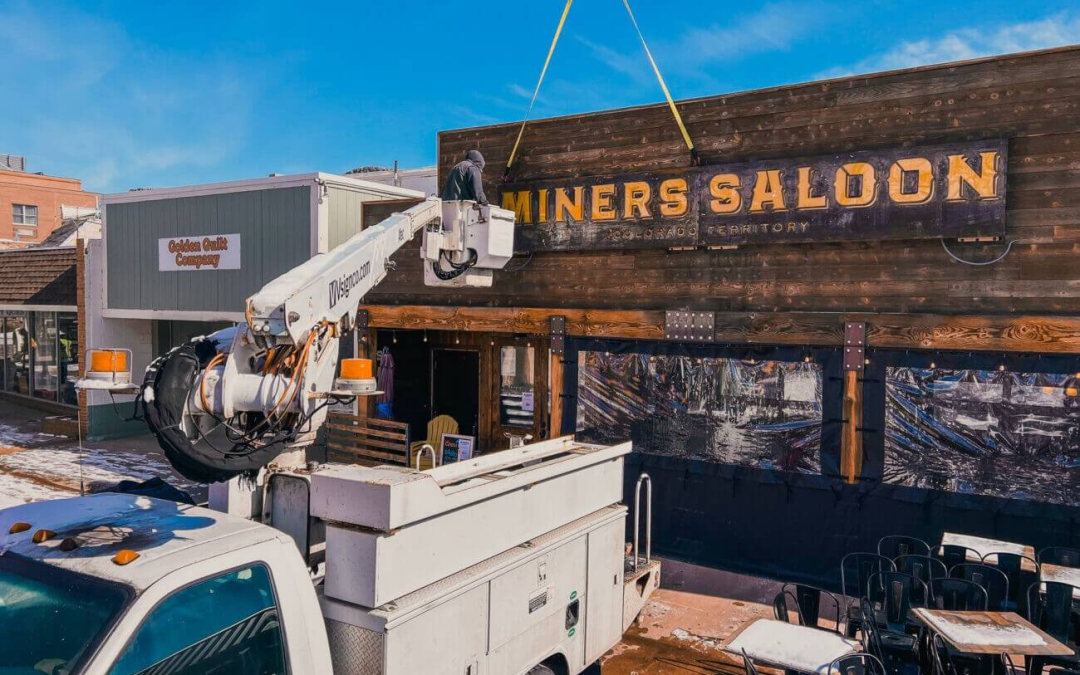
Restaurant signs in Denver, CO need to do two things at once: communicate what you are and make someone want to walk through the door. The sign types that work best for Denver restaurants depend on neighborhood, building type, and the dining experience you are selling, but across the board, illuminated channel letters, dimensional logos, and well-placed A-frame boards consistently outperform generic, low-contrast, or poorly scaled signage. Vision Visual Signs designs and installs restaurant signs across Denver’s neighborhoods, from RiNo and LoDo to Capitol Hill and South Broadway.
Denver’s restaurant scene has real density. On South Broadway alone, a single block can hold four or five competing options at the same price point, serving similar food, with similar ambiance. In neighborhoods like RiNo, Capitol Hill, and the Highlands, the same pattern repeats. When that is the environment your restaurant operates in, signage is not a secondary concern, it is part of how people decide whether to come in.
We work with Denver restaurant owners and operators at every stage: new builds getting their first exterior sign, established spots rebranding and needing updated signage, and multi-location groups standardizing their visual identity across neighborhoods. In this post, we share what we have seen work consistently for Denver restaurants with our visual branding services, and the mistakes that keep coming up, even with owners who care about their brand.
What Restaurant Signs in Denver Actually Need to Do
Before getting into sign types, it helps to be clear about the job a restaurant sign is doing. It is not just identification, it is a first impression, a vibe signal, and a navigation tool rolled into one. A sign that does all three well drives walk-ins. A sign that does only one of them creates confusion or, worse, actively discourages the wrong audience from coming in.
In Denver’s denser neighborhoods, most customers are on foot or moving slowly enough to read a sign and make a decision. In higher-traffic corridors like Colfax or Federal Boulevard, the window is shorter, your sign needs to communicate in a glance. Those are two different design problems, and the solution for one does not automatically work for the other.
The most effective restaurant signs we have installed share a few characteristics: they are legible from the relevant distance, the typography and color palette match the experience inside, and they are lit appropriately for how the business operates at night. A brunch spot on Tennyson Street has different needs than a late-night bar on Colfax. Getting the brief right from the start saves time and money later.
Before getting into sign types, it helps to be clear about the job a restaurant sign is doing. It is not just identification, it is a first impression, a vibe signal, and a navigation tool rolled into one. A sign that does all three well drives walk-ins. A sign that does only one of them creates confusion or, worse, actively discourages the wrong audience from coming in.
In Denver’s denser neighborhoods, most customers are on foot or moving slowly enough to read a sign and make a decision. In higher-traffic corridors like Colfax or Federal Boulevard, the window is shorter, your sign needs to communicate in a glance. Those are two different design problems, and the solution for one does not automatically work for the other.
The most effective restaurant signs we have installed share a few characteristics: they are legible from the relevant distance, the typography and color palette match the experience inside, and they are lit appropriately for how the business operates at night. A brunch spot on Tennyson Street has different needs than a late-night bar on Colfax. Getting the brief right from the start saves time and money later.
Sign Types That Work for Denver Restaurants
There is no single right answer for restaurant signage, but some sign types consistently outperform others for specific restaurant categories and neighborhoods. Here is what we see work.
Illuminated Channel Letters
Channel letters are the workhorse of restaurant exterior signage. They are three-dimensional, individually fabricated letters that mount directly to a building facade or raceway. For Denver restaurants that operate into the evening, which is most of them, illuminated channel letters extend visibility past sunset without adding a light box or external fixture. Face-lit channel letters have a clean, bold look; halo-lit (reverse-lit) letters produce a softer glow against the wall that works well for higher-end dining concepts. We see both used extensively in LoDo, Cherry Creek, and the Highlands.
Neon and LED Neon
Neon has had a genuine resurgence in Denver restaurants, particularly in RiNo and on South Broadway, where the aesthetic fits the neighborhood’s visual energy. Traditional glass neon and LED neon flex both deliver the warm, handcrafted look that works for bars, casual dining, and cocktail-forward concepts. For restaurant owners who want the neon aesthetic without the maintenance overhead of glass tubes, LED neon is more reliable and draws less power. We can fabricate custom neon-style signs in either format.
Dimensional Logos and Lettering
For restaurants in more upscale or polished contexts Cherry Creek, the Dairy Block, or restaurant-retail mixed-use in LoHi, dimensional logos and cut letters give an architectural, considered look. They work best when mounted against a clean surface with good ambient light or with discrete up-lighting. They communicate quality before a customer reads a menu.
A-Frame and Sidewalk Signs
A-frame chalkboard signs and sidewalk boards are underrated for Denver restaurants with good foot-traffic locations. They extend the sign envelope to the sidewalk edge, where pedestrians are already moving slowly enough to read them. The best use is not just repeating the restaurant name, it is a rotating daily special, a happy hour callout, or a single compelling line that gives someone a reason to choose your door over the next one. In neighborhoods with active sidewalk culture like Tennyson, South Pearl, and Larimer Square, a well-managed A-frame is one of the cheapest and most effective tools available.
Awning Signs
Awning signs serve double duty: they identify the restaurant and extend the usable outdoor dining footprint in Denver’s shoulder seasons. Backlit awnings with printed or applied lettering work well on streets where the building setback creates distance between the facade and the sidewalk. They are common on Colfax, East 17th Avenue, and in the Capitol Hill dining strip. One thing to get right: the awning color should not fight your interior palette. We see this go wrong when a quick awning replacement is made without referring back to the brand standards.
What Doesn’t Work: Common Restaurant Sign Mistakes in Denver
The ‘what works’ list gets a lot of attention. The ‘what doesn’t’ list is where most of the real money gets lost. Here are the mistakes we see most often with Denver restaurant signs and what goes wrong when they happen.
- Low-contrast color combinations. White text on a light background, or dark text on a dark facade, disappears at distance. Denver’s light levels vary significantly by time of day and season. Test your sign colors in full afternoon sun and at dusk before committing or work with a sign designer who runs those checks as part of the process.
- Typography that matches the menu but not the street. A beautifully custom script font that looks perfect on your menu can become completely illegible at 20 feet. Legibility at the relevant viewing distance has to be a design constraint from the start, not an afterthought.
- Wrong scale for the building. Signs that are too small for the facade they are mounted on look like an afterthought. Signs that are oversized for a cozy neighborhood spot feel aggressive. Scale matters, and it is one of the first things we establish in the site visit.
- Ignoring the nighttime environment. A restaurant that does most of its revenue at dinner needs signage that performs at night. A non-illuminated flat sign on a dark facade is essentially invisible after 6pm in winter. If your concept runs evening service, illuminated signage is not optional.
- Not accounting for Denver’s sign permit process. The City and County of Denver has specific rules on sign size, placement, illumination, and number of signs per facade. Installing a sign without a permit or installing one that does not meet code, can result in a required takedown and restart. We pull permits on every project, and we design to code from the start.
Sign Design and the Denver Restaurant Brand
The best restaurant signs we have built for Denver clients came out of a clear brief: the owner knew what experience they were selling and what visual language fit it. The hardest projects are the ones where the brand has not been settled before the sign conversation starts.
Sign design is not brand design, but it has to be informed by it. Color palette, typography choice, logo format, and finish materials all communicate something about the restaurant before anyone steps inside. A brushed aluminum dimensional logo communicates something different than hand-painted lettering above the door, even if the words are the same. Neither is wrong, but one will fit your concept better than the other, and choosing incorrectly costs you money and a redo.
For restaurant clients who are still working through their visual identity, we recommend getting the brand fundamentals settled first: logo, primary colors, and typography. From there, sign design is a relatively fast translation process. For clients who already have brand guidelines, we work from them directly.
See how our design team approaches custom sign concepts, from initial brief to final rendering.
Denver Neighborhoods and What They Require From Restaurant Signs
Denver’s commercial neighborhoods each have their own visual culture, and the signage that fits one does not automatically translate to another. Here is a rough guide based on what we have installed across the city.
- RiNo (River North Art District): High tolerance for bold, experimental, and graphic-forward signage. Neon, large-scale murals used as brand elements, dimensional logos with strong color are all at home here. Subtlety is less valued than visual personality.
- LoDo and Downtown: More professional and polished. Illuminated channel letters and dimensional signs are the standard. Large-format window graphics work well on street-level retail-adjacent restaurant spaces.
- Capitol Hill and Colfax: Eclectic and expressive. Independent restaurants here can work with a wider range of sign styles. What matters most is that the sign fits the concept and reads from a distance, Colfax has real vehicle speed to contend with.
- Highlands and LoHi: Walkable, neighborhood-oriented. Signage here tends toward refined and friendly rather than aggressive. Dimensional letters, clean channel letter signs, and well-proportioned awnings are standard.
- Cherry Creek: Higher-end and brand-conscious. Signs here need to feel intentional and polished. Low-quality materials or DIY-looking execution stands out badly in this neighborhood.
- South Broadway: A mix of dive bars, fast-casual spots, and independent restaurants. Bold and high-visibility works well here. A-frames are prevalent and effective given the foot traffic.
The Denver Sign Permit Process for Restaurants
Every exterior sign installed in Denver requires a sign permit from the City and County of Denver’s Development Services department. For restaurant owners who have not been through this before, the process has a few moving parts worth understanding.
Permit requirements for restaurant signs in Denver are governed by the Denver Zoning Code, which sets limits on sign area (based on building frontage), sign height, and illumination type depending on the zoning district. Historic districts, including parts of LoDo and Larimer Square, have additional design review requirements. Some multi-tenant buildings also require landlord approval before a permit can be filed.
Illuminated signs, including LED and neon, require electrical permits in addition to the sign permit. The full process from permit application to approval typically runs two to four weeks for straightforward projects, though historic district reviews can take longer.
We manage the permit process for every restaurant sign project we take on in Denver. That includes preparing the permit application, the required construction drawings, and any landlord documentation. For restaurant owners opening a new location on a timeline, having a sign company that owns the permit process is one fewer dependency to manage.
Browse restaurant and storefront sign projects we have completed across Denver.
Working With Vision Visual Signs on Your Restaurant Sign
Every restaurant sign project we take on starts with a site visit. We come to the location, look at the building, assess the mounting substrate and electrical infrastructure, check the sightlines from the street, and talk through what you are trying to accomplish. That information shapes the design, we do not work from assumptions.
From there, we produce a rendering that shows your sign on the actual facade. You see what you are getting before anything moves into fabrication. We present a few directions and refine from there. Once the design is locked, we handle permitting, fabrication, and installation with our own crew.
We work with independent restaurant owners, small groups with two or three locations, and larger multi-unit operators who need consistent signage across Denver. The process is the same regardless of scale, site visit, design, permit, fabricate, install.
If you are opening a new restaurant in Denver, rebranding an existing one, or replacing aging signage, reach out to start a conversation. We schedule site visits throughout the Denver metro and can usually get to your location within the week.
Frequently Asked Questions: Restaurant Signs in Denver, CO
What type of sign works best for a restaurant in Denver?
The best restaurant sign type in Denver depends on your neighborhood, building, and concept. Illuminated channel letters work well for most storefronts that operate evening service; neon and LED neon suit bars and casual dining in neighborhoods like RiNo and South Broadway; dimensional logos work for higher-end concepts in Cherry Creek or LoHi; and A-frame sidewalk signs are highly effective for foot-traffic-heavy locations anywhere in the city. A site visit is the fastest way to identify what will work for your specific building and location.
Does Vision Visual Signs handle restaurant sign permits in Denver?
Yes. We manage the full Denver sign permit process for every restaurant project we take on. This includes the sign permit application, construction drawings, and electrical permit if the sign is illuminated. For projects in historic districts like LoDo or Larimer Square, we handle the additional design review documentation as well.
How long does it take to get a restaurant sign made and installed in Denver?
Most restaurant sign projects run four to eight weeks from initial consultation to installation. The permit process is typically the longest single step, running two to four weeks for standard commercial zones. We factor the permit timeline into the project schedule from the start and communicate proactively if anything changes.
What are the sign size limits for Denver restaurants?
Sign area limits in Denver are set by the Denver Zoning Code and vary by zoning district and building frontage. Most commercial zones allow sign area up to a percentage of the building’s frontage wall area. Historic districts have additional restrictions. We design every sign to meet the applicable code for your location, and we check this before the design process starts, not after.
Can you replace or update the sign on my existing restaurant location?
Absolutely. Sign replacements and rebrands are a significant part of what we do. Whether you are updating an existing sign for a rebrand, replacing aging illuminated letters, or adding new elements like an A-frame or window graphics, we handle the scope from design through installation. If the replacement requires a permit, which it often does for structural or illuminated changes, we pull it.
Does sign design affect how many customers come in?
Yes, measurably. Research from the Sign Research Foundation shows that a substantial share of new customers at local businesses first discover them through outdoor signage. For restaurants in Denver’s competitive neighborhood dining markets, a sign that communicates your concept clearly and reads well from the street is a real driver of walk-in traffic. The inverse is also true, a sign that is hard to read, poorly scaled, or visually mismatched with the concept actively works against you.