
 (77 Ratings & Reviews)
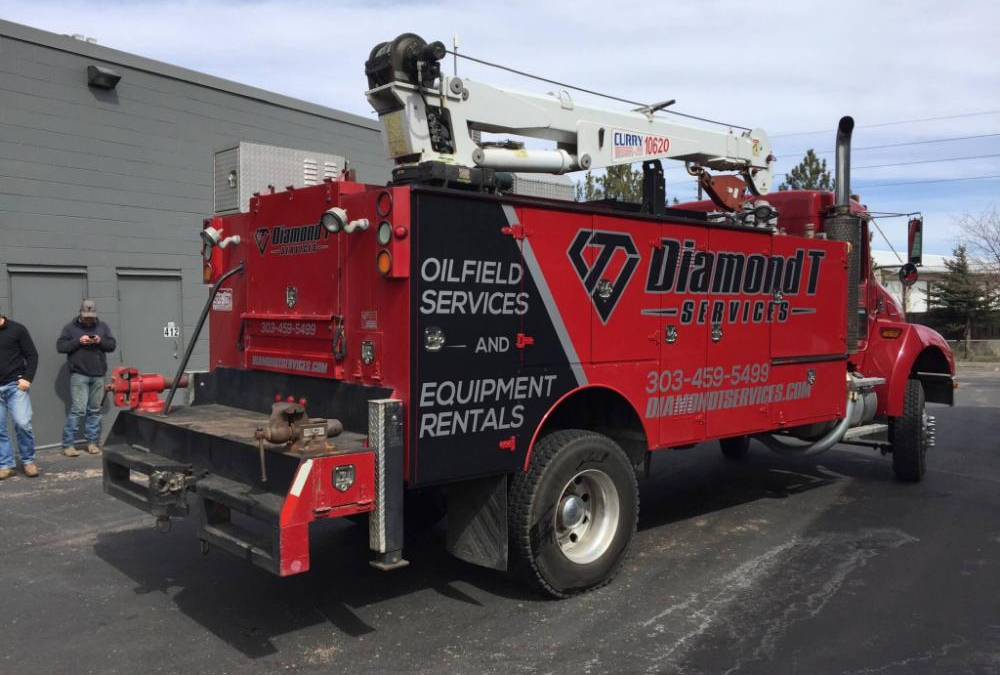
Vehicle wraps and fleet graphics in Denver turn commercial vehicles into mobile advertising, reaching thousands of impressions per day across Denver’s I-25 and I-70 corridors, suburban service routes, and neighborhood streets. The main formats are full vehicle wraps (vinyl covering the entire vehicle surface), partial wraps (vinyl covering a defined section, typically the sides and rear), and vinyl graphics or cut vinyl lettering (individual graphic elements applied to specific areas). For Denver businesses with multiple vehicles, fleet graphics programs add consistent branding across every vehicle in the fleet. Vision Visual Signs designs and installs vehicle wraps and fleet graphics for businesses throughout Denver and the metro area.
A commercial vehicle driving through Denver is a moving billboard. A plumber’s van on I-25 during the morning commute, a landscaper’s truck working its way through the Highlands, an HVAC company’s fleet of service vehicles covering the suburbs from Aurora to Lakewood — each one passes hundreds of potential customers every day. Whether those vehicles communicate a professional brand or just show up as a white box is entirely a design and production decision.
Vehicle wraps and fleet graphics are one of the highest-return marketing investments available to service businesses and trades in Denver. The upfront production investment generates impressions across the metro area every day the vehicle is on the road, without any ongoing media cost. For businesses with multiple vehicles, the fleet consistency that comes from a coordinated graphics program signals scale and professionalism before a customer ever picks up the phone.
We design and install vehicle wraps and fleet graphics programs for Denver businesses across a wide range of industries, trades, delivery and logistics, professional services, food and beverage, retail, and more. In this guide, we cover the main vehicle graphic formats, the full vs. partial wrap decision, what a fleet graphics program involves, and how the process works from design through installation.
Vehicle Graphics Formats: What Denver Businesses Need to Know
Not every business needs a full wrap. Not every vehicle is suited for one. Understanding the options, and what each actually delivers, is the starting point for a vehicle graphics project.
Full Vehicle Wraps
A full vehicle wrap covers the entire exterior surface of the vehicle; roof, hood, doors, quarter panels, bumpers, and rear with printed vinyl. The result is a vehicle that is completely transformed visually, with the brand covering every visible surface. Full wraps produce the highest visual impact per vehicle, the most cohesive brand presentation, and the strongest protection for the vehicle’s factory paint. They are the standard specification for businesses where the vehicle itself is a significant brand of touchpoint food trucks, branded delivery vehicles, company cars for client-facing staff, and high-visibility service vehicles in competitive markets.
Full wraps require precise vehicle templates, accurate color management, and professional installation, the material is being stretched around curves, compound surfaces, door handles, mirrors, and panel seams that all require specific installation techniques. Poorly installed full wraps develop bubbles, lifting edges, and misaligned seams within months. We use 3M and Avery Dennison vinyl materials and install with our own experienced wrap crew.
Partial Wraps
A partial wrap covers a defined section of the vehicle, most commonly the sides and rear, or the rear three-quarters, leaving the vehicle’s factory color as part of the design. A well-designed partial wrap uses the vehicle’s base color intentionally, incorporating it into the design rather than simply leaving it uncovered. When the vehicle color is a neutral, white, black, silver a partial wrap can be nearly indistinguishable from a full wrap at a glance, at a lower material and labor investment. Partial wraps are common for fleet programs where consistent visual identity across multiple vehicles is the priority and where maximizing coverage on each individual vehicle is secondary.
Vinyl Graphics and Cut Vinyl
Vinyl graphics, printed panels applied to specific areas of the vehicle and cut vinyl, individually cut lettering and logo elements, are the entry-level format for commercial vehicle branding. They are appropriate for businesses that need legible contact information and a logo on their vehicles without the visual transformation of a full or partial wrap. Cut vinyl lettering on van doors and rear panels is the standard for contractors, plumbers, electricians, and service businesses that prioritize clear identification over brand impact. Vinyl graphics can be updated without removing a full wrap, which makes them practical for businesses where phone numbers, services, or branding elements change periodically.
Full Wrap vs. Partial Wrap: How Denver Businesses Should Decide
The full vs. partial decision is the most common question we get from Denver business owners planning a vehicle graphics project. Here is a structured comparison.
| Factor | Full Wrap | Partial Wrap |
|---|---|---|
| Visual coverage | Entire vehicle surface; every panel, door, roof, bumper. | Defined sections; typically sides, rear, or rear three-quarters. Factory color shows on uncovered areas. |
| Design flexibility | Maximum; color, background, and graphics cover the full vehicle. | High, but factory color must be incorporated into the design. Works best on neutral base colors (white, black, silver). |
| Brand impact | Highest; vehicle is fully transformed. Strong impression at distance. | High when well-designed. At-glance impact approaches full wrap on neutral base colors. |
| Paint protection | Full wrap protects the entire paint surface from UV, minor abrasion, and chips. | Partial uncovered areas remain unprotected. |
| Best for | High-visibility brand vehicles, food trucks, client-facing company cars, single-vehicle investments. | Fleet programs, service vehicles, businesses where per-vehicle investment is spread across multiple units. |
| Removal | Full removal of all vinyl, factory paint preserved underneath if quality vinyl and proper installation. | Easier removal of covered sections, uncovered areas show original paint condition. |
| Lifespan | 5–7 years with quality vinyl (3M, Avery Dennison) and proper care. Colorado UV at altitude is a factor. | Same lifespan for covered areas. Design must account for edge exposure at wrap boundaries. |
For most Denver fleet programs; service businesses, contractors, delivery operations, a partial wrap on white or light-colored vehicles is the practical specification. The design can achieve strong visual consistency across the fleet at a more favorable investment per vehicle than full wraps on every unit. For flagship vehicles, client-facing vehicles, or businesses where a single vehicle represents the brand at a high-visibility location, a full wrap is the right call.
Fleet Graphics Programs for Denver Businesses
A fleet graphics program is a coordinated vehicle branding system, consistent design, consistent materials, and consistent installation standards applied across every vehicle in a company’s fleet. For Denver businesses with two or more commercial vehicles, a fleet program is the most efficient way to build brand presence across the metro area.
What Fleet Consistency Communicates
A fleet of vehicles with consistent, professionally executed graphics communicates scale and professionalism that individual vehicles cannot. A single wrapped van on a Denver street reads as ‘this business exists.’ A fleet of four identically branded vehicles working across different Denver neighborhoods reads as ‘this business is established.’ The difference in the customer’s perception is significant, and it is entirely a function of how the vehicles are branded, not the size of the operation.
For trades businesses operating in Denver’s residential neighborhoods HVAC, plumbing, electrical, landscaping, pest control, consistent fleet graphics also serve a neighborhood trust function. Homeowners paying attention to which service trucks they see regularly in their neighborhood notice a consistent brand. The recognition builds over months of repeat impressions. That is advertising that no paid media campaign can replicate efficiently.
Managing a Denver Fleet Graphics Program
Fleet programs have operational considerations beyond single-vehicle wraps. Vehicles are added, retired, and replaced. Rebrands happen. Contact information changes. A fleet graphics program needs to be designed with those realities in mind.
We design fleet graphics with a master template approach, a design system that specifies how the brand appears on every vehicle type in the fleet, with consistent placement, sizing, and color management across vans, trucks, sedans, and specialty vehicles. When a new vehicle is added to the fleet, the template is applied to the new vehicle’s specific profile. When a rebrand happens, the template is updated and the fleet is re-wrapped on a schedule that fits the business’s operational needs.
For Denver businesses adding fleet vehicles regularly, growing service operations, delivery companies expanding routes, contractors adding crews, we keep fleet design files on hand so new vehicle additions can be turned around quickly without restarting the design process.
Vehicle Wrap Design: What Makes It Work in Denver Traffic
Vehicle wrap design is a different discipline from static sign design. The surface is three-dimensional and curved. The viewing distance and speed vary constantly. The design needs to read clearly in a half-second glance on I-25 at 65 miles per hour and equally well in a residential driveway at 10 feet. Most vehicle wrap design failures come from applying static graphic design principles to a format that requires different thinking.
Hierarchy and Legibility
For commercial vehicles in Denver, the priority hierarchy is: business name, service category or tagline, phone number or website. In that order, in that size relationship. The business name needs to be legible from a distance sufficient to register before the vehicle passes. Service description, ‘Plumbing and Drain,’ ‘Commercial HVAC,’ ‘Landscape and Irrigation’, gives the viewer immediate context. Contact information completes the impression for anyone who wants to follow up. Every additional element on the vehicle competes with these three.
Color and Contrast for Denver Driving Conditions
Denver’s light environment is specific: high-altitude UV, intense midday sun, strong shadows from buildings in LoDo and Cherry Creek, and highly reflective surfaces during winter snow. High-contrast designs, strong value contrast between text and background, not just color contrast, perform better in Denver’s variable light conditions than designs that rely on subtle color differentiation. White or light lettering on a dark background, or dark lettering on a white or silver vehicle, consistently reads better across conditions than same-tone combinations.
Vehicle-Specific Design
A wrap design that looks great on a full-size van may not translate directly to a pickup truck or a sedan. Each vehicle type has a different panel layout, different door configurations, and different proportional relationships between the cab, bed, and cargo area. We design vehicle graphics on accurate vehicle-specific templates, not adapted from a generic layout, which means the design is positioned correctly for the actual surface it will occupy. For fleet programs covering multiple vehicle types, each vehicle type gets its own template variant within the unified design system.
Explore our vinyl signs and graphics services, including vehicle wraps, fleet graphics, and commercial vinyl applications for Denver businesses.
Vehicle Wrap Materials and Lifespan in Colorado
Colorado’s environment is harder on vehicle wraps than most of the country. High-altitude UV exposure accelerates color fading and vinyl degradation faster than lower-altitude climates. Temperature swings between seasons, including sub-zero overnight lows and 90-plus degree summer afternoons, stress the adhesive and the vinyl material at wrap edges and seams. Hail, which is a genuine risk across the Denver metro from May through September, can damage exposed vinyl.
Material specification matters significantly in Colorado. We specify cast vinyl, 3M 1080 series and Avery Dennison Supreme Wrapping Film are our primary materials, rather than calendered vinyl for vehicle wrap applications. Cast vinyl conforms better to complex vehicle curves, holds its dimensional stability in temperature extremes, and carries a longer rated lifespan than calendered alternatives. The difference is visible in how the wrap performs at edges, door handles, and panel seams after a year or two of Colorado weather.
Expected lifespan for a quality vehicle wrap in Denver with proper care: five to seven years for full and partial wraps using cast vinyl. Vinyl graphics and cut vinyl on low-stress flat surfaces can last longer. Factors that shorten lifespan: parking in direct sun without cover, automated car washes with brushes (hand wash or touchless only), and vehicle park-and-idle operations in high-heat conditions.
Wrap removal at end of life or at rebrand: cast vinyl wraps installed over a vehicle’s factory paint in good condition remove cleanly without damaging the underlying paint. We handle wrap removal as well as new installations, for fleet programs where vehicles are cycled out, we can remove the existing wrap and prepare the vehicle surface for the next application.
Industries We Wrap in Denver and the Metro Area
Vehicle graphics work for virtually any business that operates vehicles in Denver, the format is industry-agnostic. That said, the businesses that get the most from fleet graphics programs are those whose vehicles are on the road frequently, in the neighborhoods where their customers live and work.
- Trades and home services: HVAC, plumbing, electrical, roofing, pest control, cleaning, the industries where a service van in a Denver neighborhood is a daily occurrence. Fleet graphics in these industries have the highest impressions-per-vehicle of any commercial category because the vehicles are consistently on residential streets.
- Landscaping and property maintenance: Trucks and trailers working Denver’s residential and commercial properties. A wrapped truck towing a trailer through Cherry Creek or Washington Park is visible to the same demographic repeatedly across an entire season.
- Delivery and logistics: Companies with delivery routes across the Denver metro, food distribution, medical supply, courier services, whose vehicles cover the city systematically every day.
- Construction and general contracting: Pickups and work vans operating at job sites across Denver and the suburbs. Job site vehicles are seen by neighbors, other contractors, and property owners in the area.
- Food and beverage: Catering vehicles, food trucks, beverage distributor trucks, vehicles where the wrap is both brand advertising and product packaging in one.
- Professional services: Real estate, financial services, healthcare, businesses with company vehicles for client-facing staff where the vehicle represents the brand at client locations.
The Vehicle Wrap Process: From Brief to Installation
A vehicle wrap project has more steps than most business owners expect when they first inquire. Here is the full sequence for a single-vehicle or fleet project.
- Vehicle measurement and template selection: We work from accurate vehicle-specific templates for the make, model, and year of each vehicle. For fleet programs covering multiple vehicle types, we confirm templates for each.
- Design: Our design team produces a full vehicle rendering, the design shown on the actual vehicle template in three dimensions. For fleet programs, we show the design on each vehicle type in the fleet. You see exactly what the finished vehicle will look like before we print anything.
- Proofing and approval: Design is approved before production begins. Color proofs are produced for color-critical applications.
- Print and laminate: Graphics are printed on cast vinyl and laminated for UV and scratch protection. Print color management for vehicle wraps is different from standard print, we calibrate for the specific vinyl material and the vehicle’s viewing distance.
- Surface preparation: The vehicle is thoroughly cleaned and decontaminated before installation. Adhesive residue, wax, and surface contamination cause premature edge lifting. We do not skip surface preparation.
- Installation: Wraps are installed in a controlled indoor environment; temperature, humidity, and cleanliness all affect adhesion quality. Same-day outdoor installation in Denver’s summer heat or winter cold produces inferior results. Our installation is done in our shop.
- Quality inspection and edge sealing: Every wrap is inspected after installation. Edges at panel seams and trim pieces are sealed to prevent lifting. This is the step that separates a wrap that lasts five years from one that starts peeling in eighteen months.
For fleet programs, vehicle drop-off and pickup scheduling is coordinated with the business’s operational calendar, service vehicles need to be back on the road, and we work around that reality. We have handled fleet programs where vehicles are brought in one at a time to keep the fleet operational throughout the installation schedule.
Browse our vehicle wrap portfolio to see full wraps, partial wraps, and fleet graphics programs we have completed for Denver-area businesses.
Frequently Asked Questions: Vehicle Wraps and Fleet Graphics in Denver
How long does a vehicle wrap last in Denver, CO?
A quality vehicle wrap using cast vinyl, 3M 1080 series or Avery Dennison Supreme Wrapping Film; lasts five to seven years in Denver’s climate with proper care. Colorado’s high-altitude UV exposure and temperature swings are harder on vinyl than lower-altitude environments, which makes material specification more important here than in many other markets. Lifespan is shortened by frequent automated car washes with brushes, extended direct-sun parking without cover, and low-quality vinyl materials. Hand washing or touchless wash is the standard recommendation for wrapped vehicles.
What is the difference between a full wrap and a partial wrap?
A full wrap covers the entire exterior surface of the vehicle with printed vinyl; every panel, door, roof, and bumper. A partial wrap covers a defined section, typically the sides and rear, leaving the vehicle’s factory color visible on uncovered areas. Full wraps produce maximum visual impact and provide full paint protection. Partial wraps achieve strong brand visibility at a lower material investment per vehicle, and are the standard specification for fleet programs on white or neutral-colored vehicles where the base color integrates naturally with the design.
Can a vehicle wrap be removed without damaging the paint?
Yes, when quality cast vinyl is installed over factory paint in good condition and the wrap is properly maintained. Cast vinyl wraps are designed to be removable, the adhesive releases cleanly from factory paint without leaving residue or pulling the paint. Wraps installed over existing damage, poor-quality repainted surfaces, or with lower-grade calendered vinyl may not remove as cleanly. We handle wrap removal and can assess the underlying paint condition before installation to confirm the vehicle is a good candidate for a quality wrap.
How does a fleet graphics program work for a Denver business?
A fleet graphics program starts with a master design template, a design system specifying how the brand appears on every vehicle type in the fleet, with consistent placement, sizing, and color across vans, trucks, and any other vehicle types. Each vehicle gets a template variant specific to its make and model. When new vehicles are added, we apply the template to the new vehicle’s profile without restarting the design process. We keep fleet design files on hand for active fleet clients in Denver so new additions can be turned around quickly.
Does Vision Visual Signs handle fleet graphics for businesses across the Denver metro?
Yes. We work with fleet programs across Denver and the surrounding metro area; Aurora, Lakewood, Englewood, Thornton, Westminster, Arvada, and Commerce City. For businesses with vehicles operating throughout the metro, we coordinate vehicle drop-off and pickup around the operational schedule to minimize disruption to service operations. Fleet programs ranging from two vehicles to larger operations are within our standard scope.
What vinyl material does Vision Visual Signs use for vehicle wraps?
We specify cast vinyl for all vehicle wrap applications, primarily 3M 1080 series and Avery Dennison Supreme Wrapping Film. Cast vinyl conforms better to complex vehicle curves, holds its dimensional stability through Colorado’s temperature extremes, and carries a longer rated lifespan than calendered vinyl alternatives. All wrap vinyl is over-laminated for UV protection and scratch resistance. We do not use calendered vinyl for full or partial vehicle wraps.