
 (77 Ratings & Reviews)
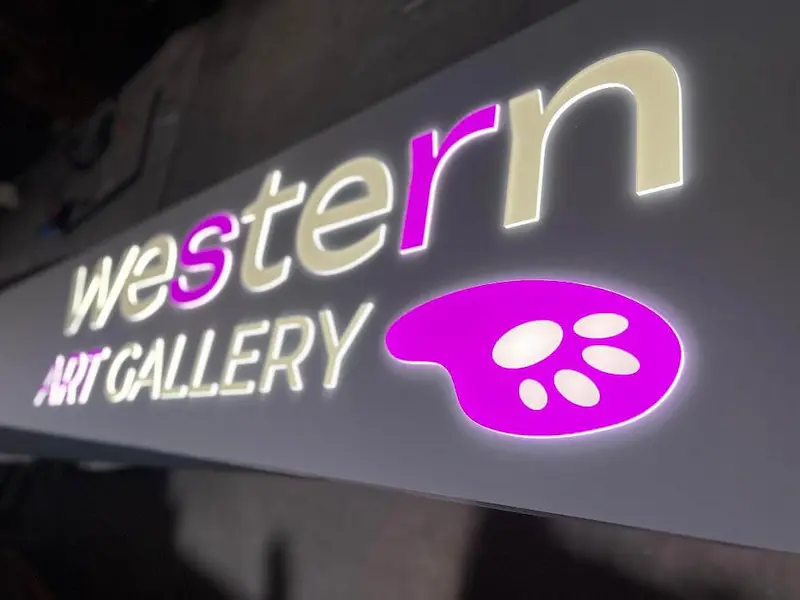
If your business in Colorado still has fluorescent signs, you’re likely staring down a compliance deadline. Colorado’s fluorescent lamp ban, enacted through state legislation targeting T8, T12, and compact fluorescent lamps, phases out the sale and distribution of these bulbs, making LED retrofits not just a smart upgrade but a business necessity. At Vision Visual Signs, we’ve been helping Colorado businesses make this transition for years, and a sign retrofit is one of the most cost-effective steps a local business can take right now.
This guide walks you through exactly what a LED retrofit service in Colorado involves for illuminated signs — from cabinet signs and lightboxes to channel letters — the costs you can realistically expect, and how to take advantage of Xcel Energy rebates that can offset your investment.
What Is the Colorado Fluorescent Lamp Ban?
Colorado fluorescent lamp ban — a set of state regulations phasing out the manufacture, sale, and distribution of linear fluorescent (T8, T12) and compact fluorescent (CFL) lamps in Colorado, consistent with EPA energy efficiency standards. The phase-out began in stages and accelerates through 2025–2026, after which businesses cannot legally purchase replacement fluorescent lamps from Colorado retailers or distributors.
The regulations align with Colorado’s broader Clean Air and Energy goals. While the law targets lamp manufacturers and distributors first, the downstream effect is clear: once replacement lamps are unavailable, businesses with fluorescent signs have only one path.
orward — converting to LED. The smart move is to plan that conversion now, before your lamps fail and you’re facing an emergency repair with no compliant replacement in stock.
| Lamps affected include: |
|
|
|
|
| If your illuminated sign — whether a cabinet sign, lightbox, or backlit panel — currently uses any of these lamp types, you’re on the clock. |
Which Signs Need an LED Retrofit?
Most LED retrofit guides focus on ceiling fixtures and commercial lighting panels. If you own a business, you also have to think about your signage. Here are the most common sign types we retrofit for Colorado businesses and what’s involved with each:
Cabinet Signs (Box Signs)
A cabinet sign or box sign is the rectangular illuminated sign you see on storefronts and strip malls. The interior typically uses T8 or T12 tubes running the length of the box. An LED retrofit replaces those tubes with LED strips or retrofit kits, significantly reducing wattage (typically 50–70% energy savings) while maintaining or improving brightness. Most cabinet sign retrofits can be completed in a few hours without replacing the cabinet itself.
Lightbox Signs and Backlit Panels
Lightboxes — including illuminated menu boards, backlit panels, and trade show displays — often use fluorescent tubes behind a translucent face. The retrofit process involves removing the old ballast, installing an LED driver or ballast-bypass LED tubes, and in some cases adding LED strip lighting for more even illumination. Modern LED lightbox conversions produce more consistent brightness across the face with fewer hot spots.
Channel Letter Signs
Channel letters already largely use LED modules in newer installations, but older channel letter signs built before 2015 frequently used neon or small fluorescent sources. A channel letter LED retrofit replaces those sources with flexible LED modules — brighter, more energy-efficient, and without the fragile gas-filled tubes that can fail suddenly. The result is a sharper, more vibrant appearance at a fraction of the operating cost.
We’re asked about cost on nearly every retrofit consultation we do. Here’s what Colorado businesses can realistically expect, based on our experience with commercial sign retrofits across the Front Range: If your business in Colorado still has fluorescent signs, you’re likely staring down a compliance deadline. Colorado’s fluorescent lamp ban — enacted through state legislation targeting T8, T12, and compact fluorescent lamps — phases out the sale and distribution of these bulbs, making LED retrofits not just a smart upgrade but a business necessity. At Vision Visual Signs, we’ve been helping Colorado businesses make this transition for years, and a sign retrofit is one of the most cost-effective steps a local business can take right now.
This guide walks you through exactly what a LED retrofit in Colorado involves for illuminated signs — from cabinet signs and lightboxes to channel letters — the costs you can realistically expect, and how to take advantage of Xcel Energy rebates that can offset your investment.
What Is the Colorado Fluorescent Lamp Ban?
Colorado fluorescent lamp ban — a set of state regulations phasing out the manufacture, sale, and distribution of linear fluorescent (T8, T12) and compact fluorescent (CFL) lamps in Colorado, consistent with EPA energy efficiency standards. The phase-out began in stages and accelerates through 2025–2026, after which businesses cannot legally purchase replacement fluorescent lamps from Colorado retailers or distributors.
The regulations align with Colorado’s broader Clean Air and Energy goals. While the law targets lamp manufacturers and distributors first, the downstream effect is clear: once replacement lamps are unavailable, businesses with fluorescent signs have only one path.
orward — converting to LED. The smart move is to plan that conversion now, before your lamps fail and you’re facing an emergency repair with no compliant replacement in stock.
| Lamps affected include: |
|
|
|
|
| If your illuminated sign — whether a cabinet sign, lightbox, or backlit panel — currently uses any of these lamp types, you’re on the clock. |
Which Signs Need an LED Retrofit?
Most LED retrofit guides focus on ceiling fixtures and commercial lighting panels. If you own a business, you also have to think about your signage. Here are the most common sign types we retrofit for Colorado businesses and what’s involved with each:
Cabinet Signs (Box Signs)
A cabinet sign or box sign is the rectangular illuminated sign you see on storefronts and strip malls. The interior typically uses T8 or T12 tubes running the length of the box. An LED retrofit replaces those tubes with LED strips or retrofit kits, significantly reducing wattage (typically 50–70% energy savings) while maintaining or improving brightness. Most cabinet sign retrofits can be completed in a few hours without replacing the cabinet itself.
Lightbox Signs and Backlit Panels
Lightboxes — including illuminated menu boards, backlit panels, and trade show displays — often use fluorescent tubes behind a translucent face. The retrofit process involves removing the old ballast, installing an LED driver or ballast-bypass LED tubes, and in some cases adding LED strip lighting for more even illumination. Modern LED lightbox conversions produce more consistent brightness across the face with fewer hot spots.
Channel Letter Signs
Channel letters already largely use LED modules in newer installations, but older channel letter signs built before 2015 frequently used neon or small fluorescent sources. A channel letter LED retrofit replaces those sources with flexible LED modules — brighter, more energy-efficient, and without the fragile gas-filled tubes that can fail suddenly. The result is a sharper, more vibrant appearance at a fraction of the operating cost.
How the LED Retrofit Process Works
A professional sign LED retrofit in Colorado typically follows this process — most jobs are complete in a single visit:
Site assessment. We inspect the existing sign, document the lamp types, check the ballast condition, and measure the sign cabinet or channel depth to determine the right LED retrofit kit.
Ballast evaluation. Ballasts in older fluorescent signs are often the first component to fail. We test whether the ballast can drive LED retrofit tubes (Type A LED) or whether a ballast bypass (Type B LED) is required. Bypassing the ballast is more work upfront but eliminates a common failure point and extends the life of the retrofit
Retrofit kit installation. We install UL-listed LED retrofit kits sized to your sign dimensions. For cabinet signs, this typically means LED tube replacements or internal LED strip arrays. For lightboxes, we may reconfigure the internal layout to eliminate dark spots.
Testing and calibration. We power the sign and test brightness uniformity, check for hot spots, and confirm the color temperature matches your brand’s existing signage. Typical LED color temperature for signs is 4000K–5000K (cool white) for retail visibility.
Documentation for rebate filing. We provide documentation of the retrofit — wattage before and after, lamp types removed, and LED specs — which is required for Xcel Energy rebate applications.
Most single-sign retrofits take 2–4 hours. Multi-sign locations (strip mall tenants with 3+ illuminated signs) typically complete in a single day.
- Before Xcel Energy rebates. Xcel Energy offers prescriptive rebates for LED conversions in their Colorado service territory — including rebates for LED sign retrofits when the project replaces qualifying fluorescent lamps. Rebates typically range from $15–$50 per lamp replaced, which can offset 15–30% of the retrofit cost. We handle the rebate paperwork as part of our service.
- ROI on LED retrofit — the return on investment for most sign retrofits we complete falls in the 18–30 month range. After payback, the energy savings are pure operating profit. LED lamps carry a rated life of 50,000+ hours vs. 15,000–30,000 hours for fluorescent, meaning fewer replacements and lower maintenance costs for the next decade.
Why Colorado Businesses Should Act Now (Not After a Lamp Fails)
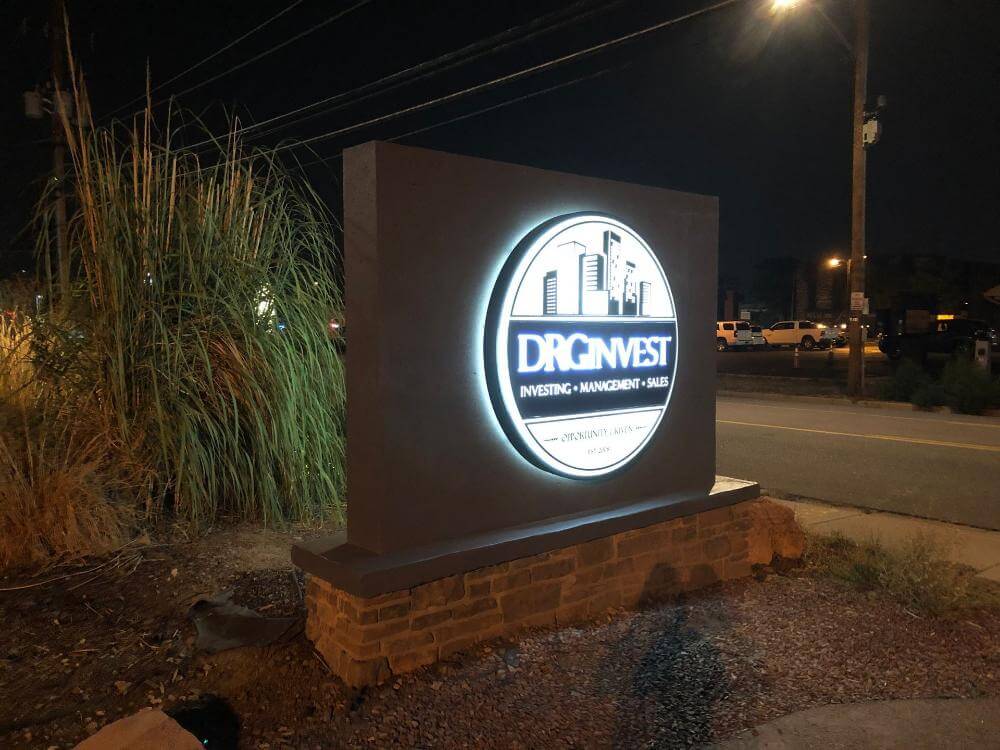
In our experience retrofitting signs across the Denver metro and Front Range, the businesses that wait until a fluorescent tube dies before planning a retrofit pay more — in emergency service rates, in signage downtime, and in lost visibility during peak hours. The fluorescent phase-out means replacement lamps will become increasingly difficult to source from Colorado distributors as we move through 2025 and 2026.
Proactive retrofit jobs, by contrast, can be scheduled at convenient off-hours, planned for multi-sign properties in a single visit, and filed for Xcel Energy rebates in the same billing period. We’ve seen businesses reduce their sign energy costs by 55–65% while simultaneously eliminating their most frequent service call — fluorescent lamp replacement.
There’s also a brand visibility angle: LED-lit signs are consistently brighter and more uniformly lit than aging fluorescent signs, where tubes dim over time and dark patches form before complete failure. If your competition has already converted, your fluorescent sign may already be visibly dimmer on the same street.
Frequently Asked Questions About LED Retrofits in Colorado
Is it illegal to use fluorescent signs in Colorado?
A: Colorado’s fluorescent lamp ban restricts the sale and distribution of fluorescent lamps, not their immediate use — but once replacement lamps are no longer available through Colorado distributors, maintaining a fluorescent sign becomes practically impossible. Businesses that continue using fluorescent signs will face non-repairable failures with no compliant replacement option available in state. Planning an LED retrofit now avoids being forced into an emergency conversion when a tube fails with no replacement in stock.
What types of fluorescent lamps are being phased out in Colorado?A: Colorado’s regulations phase out T8 and T12 linear fluorescent tubes, T5 and T5HO lamps, and most standard compact fluorescent lamps (CFLs). These are the lamp types most commonly found in illuminated cabinet signs, lightbox signs, and older channel letter signs. If your sign uses any of these lamp types, an LED retrofit is the recommended path forward.
How long does a sign LED retrofit take?
A: Most single-sign LED retrofits are completed in 2–4 hours by a professional sign technician. Multi-sign commercial properties — such as strip mall tenants with 3 or more illuminated signs — can typically be completed in a single day. Scheduling a proactive retrofit avoids emergency service timelines, which can run 1–2 weeks during peak seasons.
Can I get a rebate for retrofitting my business sign to LED in Colorado?
A: Yes — Xcel Energy offers prescriptive LED retrofit rebates in their Colorado service territory, including rebates for qualifying LED sign retrofits that replace fluorescent lamps. Rebates are typically calculated per lamp replaced and can offset 15–30% of total retrofit costs. Vision Visual Signs handles rebate documentation as part of our retrofit service, so you don’t have to navigate the paperwork alone.
What is a ballast bypass and do I need one for my sign?
A: A ballast bypass (also called a Type B LED installation) removes the existing fluorescent ballast from the sign circuit and connects LED tubes directly to line voltage. This is recommended when the existing ballast is old, inefficient, or near the end of its rated life. While it adds labor to the initial installation, a ballast bypass eliminates the most common failure point in fluorescent sign circuits and extends the expected service life of the LED retrofit by 3–5 years compared to leaving the ballast in place.
Will my sign look different after an LED retrofit?
A: Most businesses report that LED-retrofitted signs look noticeably brighter and more evenly lit than the fluorescent originals. LED strips and retrofit kits are designed to match or exceed the lumen output of the fluorescent tubes they replace, and modern LEDs don’t dim progressively the way fluorescent lamps do over time. You can also choose a color temperature — typically 4000K or 5000K for maximum retail visibility — to fine-tune the appearance.