
 (77 Ratings & Reviews)
Channel letter signs and cabinet signs are the two most common illuminated sign formats for Denver businesses, but they serve different purposes. Channel letters are three-dimensional, individually fabricated letters mounted directly to a building facade, they are the standard choice for storefronts that want a high-end, brand-specific look. Cabinet signs (also called light box signs) are enclosed aluminum frames with an illuminated face they provide even, consistent illumination across the entire sign area and tend to work well for strip mall locations, fast-casual businesses, and applications where multiple tenants share a single sign structure. The right choice depends on your building type, brand, and how the sign will be viewed from the street.
When Denver business owners start planning exterior signage, one of the first real decisions is whether to go with channel letters or a cabinet sign. Both are illuminated. Both are permanent. Both require permits. But they look different, perform differently on different buildings, and serve different brand positions, and choosing the wrong one for your situation is an expensive mistake to undo.
We fabricate and install both formats for businesses across Denver, from storefronts in LoDo and Cherry Creek to strip mall tenants in Aurora and Lakewood and office parks throughout the metro area. In this guide, we break down how each sign type is built, where each performs best, and the factors that should actually drive the decision for Denver businesses.
What Are Channel Letter Signs?
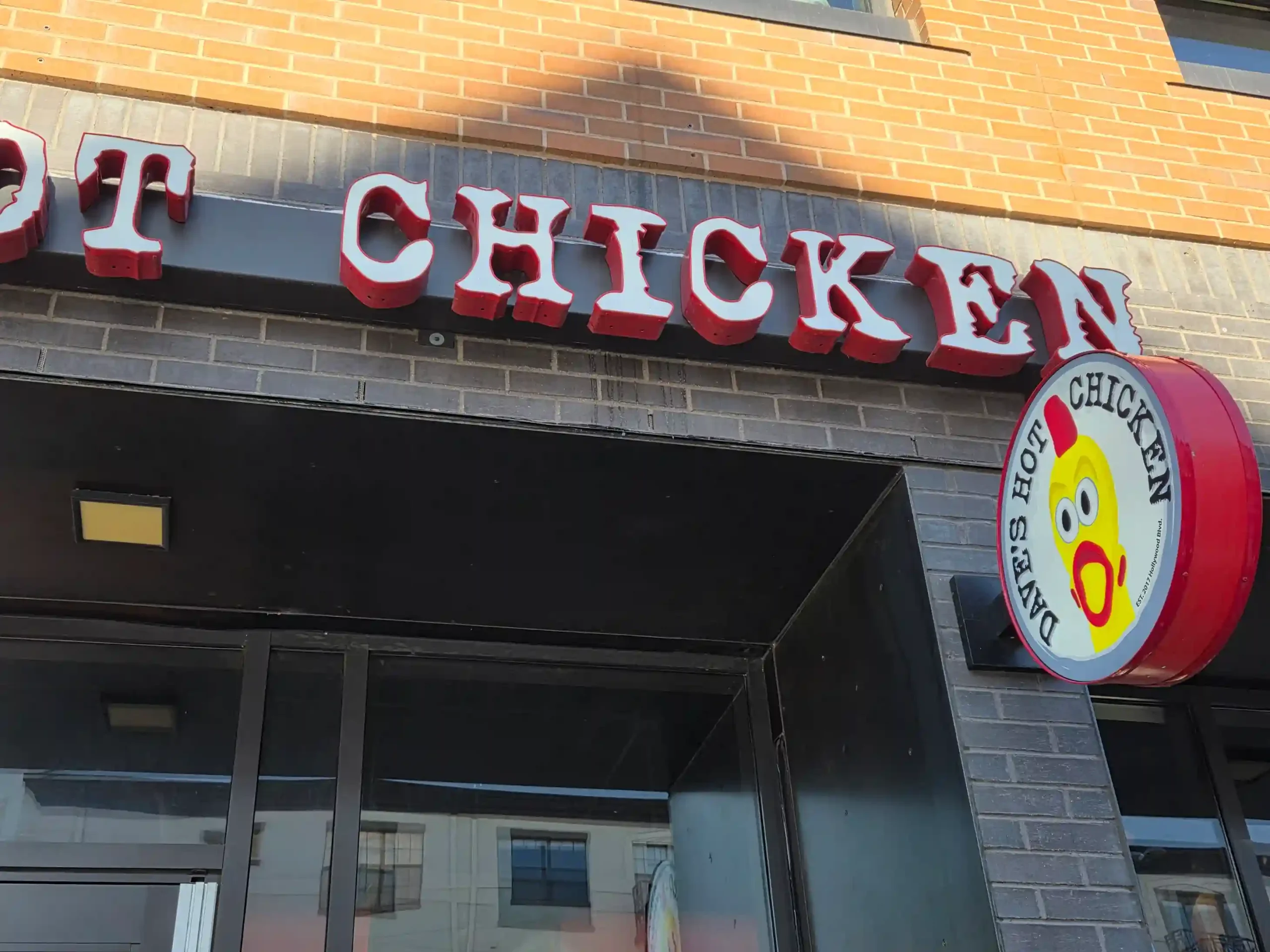
Channel letters, sometimes called dimensional letters or formed letters, are individually fabricated three-dimensional characters. Each letter is its own fabricated unit: a formed aluminum or steel return (the depth of the letter), a face (typically acrylic), and in illuminated versions, LED modules or neon tubing inside the letter cavity. Letters are mounted either directly to the building facade (direct mount) or attached to a painted raceway that runs along the wall.
The primary variants are face-lit (the face glows, producing a bold, high-visibility look), halo-lit or reverse-lit (LEDs face the wall and illuminate the building surface behind the letter, creating a soft halo effect), and combination-lit (both face and halo illuminated simultaneously). Each variant communicates something different: face-lit reads as bold and commercial; halo-lit reads as upscale and refined.
Because every letter is fabricated individually, channel letter signs can match any font, any color, and virtually any logo treatment. That flexibility is their main advantage over cabinet signs for brand-focused businesses. The tradeoff is that the fabrication process is more involved, and the installation requires precise mounting on the building facade.
What Are Cabinet Signs (Light Box Signs)?
A cabinet sign, also called a light box sign or backlit sign, is an enclosed aluminum frame with a translucent face panel. The face is typically a printed graphic, a push-through acrylic panel, or a translucent vinyl application. LED modules inside the cabinet illuminate the face evenly from behind. Cabinet signs come in single-face and double-face configurations, standard rectangular shapes, and custom shapes for specific applications.
The main advantage of a cabinet sign is consistent, even illumination across the entire sign face. There are no shadows between letters, no variation in brightness between characters, the whole face is lit uniformly. This makes them particularly effective for logos with complex graphics, multi-color designs, and applications where the sign face will be viewed from multiple angles (which is why double-face cabinets are common on perpendicular-mounted building signs and pylon structures).
Cabinet signs are also straightforward to update. When a tenant changes or a brand is refreshed, the face panel can be replaced without touching the frame or the electrical components. For multi-tenant strip malls and properties with frequent turnover, this is a meaningful operational advantage over channel letters.
Channel Letters vs. Cabinet Signs: Side-by-Side Comparison
The table below covers the key decision factors for Denver businesses choosing between the two formats, including dimensional formed channel letters.
| Factor | Channel Letters | Cabinet Signs |
|---|---|---|
| Visual appearance | 3D, dimensional — each letter stands out from the wall. High-end, architectural look. | Flat, flush face — full graphic or text on an illuminated panel. Clean and even. |
| Brand customization | Any font, any color, any logo treatment. Maximum design flexibility. | Full-color graphics possible but constrained by the flat panel format. |
| Illumination type | Face-lit, halo-lit, or combination. Different looks for different brand positions. | Even, uniform backlit illumination across the entire face. No shadow variation. |
| Best building types | Smooth facade, masonry, EIFS, metal panels. Direct mount or raceway. | Works on most surfaces. Ideal when a frame can be set into or flush with the facade. |
| Best business types | Retail, restaurants, professional services, any brand-forward business. | Strip mall tenants, fast-casual, franchise locations, multi-tenant buildings. |
| Face update / rebranding | Letters must be refabricated for font or size changes. Color changes are easier. | Face panel replaces without touching frame or electrical, fast and lower-effort. |
| Maintenance | LED modules accessible per letter. Repairs are isolated to the affected character. | LED bank or modules inside cabinet. Full face removal required for internal service. |
| Denver permit requirements | Sign permit + electrical permit required. Same process for both formats. | Sign permit + electrical permit required. Same process for both formats. |
| Nighttime visibility | Excellent, especially face-lit. Individual letter brightness is high. | Excellent. Uniform face illumination maintains brightness across the full sign area. |
| Installation complexity | Higher, individual letter mounting requires precise layout on the facade. | Lower, cabinet mounts as a unit. Faster installation in most cases. |
Which Sign Type Is Right for Your Denver Business?
Most businesses that ask us this question already have a strong instinct about the answer, they just want confirmation that their instinct is right. Here is how we walk through the decision.
Choose Channel Letters If:
- Your brand identity is well-defined and your logo or wordmark needs to be reproduced exactly, including specific fonts or custom letterforms.
- You want the sign to read as high-end, architectural, or elevated, particularly relevant for restaurants, professional services, and retail in Cherry Creek, the Highlands, LoDo, and RiNo.
- Your building facade provides a clean mounting surface and the building owner or property manager permits direct-mount installation.
- You want illumination flexibility, the ability to choose face-lit, halo-lit, or a combination based on the effect you want at night.
- You are a single-tenant business and do not anticipate frequent brand changes that would require refabricating the letters.
Choose Cabinet Signs If:
- You are a tenant in a strip mall, shopping center, or multi-tenant building where a uniform sign system is in place or preferred by the landlord.
- Your logo includes complex graphics, multiple colors, or photographic elements that would be difficult or impractical to execute in channel letter format.
- You run a franchise or operate under a national brand with specific sign specifications, cabinet signs are the standard format for most franchise sign programs.
- You anticipate brand or name changes and want the operational flexibility to replace a face panel without a full sign refabrication.
- Installation timeline is a constraint, cabinet signs install faster than individually mounted channel letters in most cases.
The honest answer is that for many Denver storefronts, channel letters are the right choice for brand-forward businesses in standalone or high-visibility locations, and cabinet signs are the right choice for tenant situations or businesses where operational flexibility matters more than architectural distinction. When the answer is genuinely unclear, a site visit settles it.
Denver Sign Permits: What Both Sign Types Require
Both channel letter signs and cabinet signs require sign permits from the City and County of Denver before installation. The permitting process is the same regardless of sign type: a sign permit covering the dimensions, placement, and specifications of the sign, plus an electrical permit if the sign is illuminated, which both formats are.
Denver’s sign code governs total sign area per building frontage, sign height, setbacks, and illumination type depending on the zoning district. In some of Denver’s historic districts, including parts of LoDo, Curtis Park, and Larimer Square, signs are subject to additional design review that can add time to the approval process. Properties in planned developments or business improvement districts may also have their own design standards that layer on top of the base code.
One thing that catches Denver business owners off guard: if you are a tenant in a multi-tenant building, you typically need landlord approval before the city will accept a permit application. We handle that documentation as part of our permitting process, but it is worth knowing upfront so you can get that conversation started with your property manager early.
We pull permits for every illuminated sign project we install in Denver. That includes preparing the application, the construction drawings, and the electrical documentation. For businesses on a timeline, particularly those opening a new location, having the permit process handled by the sign company is one fewer critical-path item to manage.
See our full range of channel letter and illuminated sign options to get a sense of what is possible for your building and brand.
What the Fabrication and Installation Process Looks Like
For both sign types, the process starts the same way: a site visit. We look at the building, the mounting substrate, the electrical infrastructure, and the sightlines from the street. That information determines what is physically possible and shapes the design from the start.
Channel Letter Fabrication and Installation
Once the design is approved, each letter is individually fabricated: the return is formed from aluminum, the face is cut and formed from acrylic, and LED modules are installed inside the cavity. Letters are then test-illuminated before shipping. On the installation day, our crew lays out the letter positions on the facade, anchors each letter individually (or attaches the raceway first, then the letters), and connects to the building electrical. The process is precise, layout errors are visible and expensive to correct, which is why we handle installation with our own crew rather than subcontracting it.
Cabinet Sign Fabrication and Installation
Cabinet sign fabrication involves building the aluminum frame to the specified dimensions, installing the LED modules inside, and producing the face panel, either printed on translucent material, push-through acrylic, or vinyl application depending on the design. The cabinet is test-illuminated before delivery. Installation is generally faster than channel letters: the cabinet mounts as a single unit, the electrical connection is made, and the face is secured. For double-face cabinets on perpendicular mounts or pylon structures, installation involves the mounting bracket or structure as well.
For either sign type, total timeline from signed approval to installation runs four to eight weeks, with the permit process typically representing the longest single step. We factor permit timelines into the schedule from day one.
Browse completed illuminated sign projects channel letters, cabinet signs, and more installed for Denver-area businesses.
Working With Vision Visual Signs on Your Illuminated Sign
Vision Visual Signs fabricates and installs both channel letter signs and cabinet signs for businesses across Denver and the surrounding metro area. We are not a broker or a reseller, fabrication and installation are both handled in-house, which means one team owns the project from initial design through the final sign-off on the installation.
For business owners who are not sure which sign type is right for their situation, the site visit is where that answer usually becomes clear. We look at the building, talk through the brand, assess the viewing distance and the nighttime environment, and come back with a recommendation. We do not push one format over the other, we recommend what actually fits the building and the business.
If you are planning an illuminated sign for a Denver location, new build, rebrand, or replacement, reach out to get a consultation scheduled. We work throughout Denver and the metro, including Lakewood, Englewood, Aurora, Arvada, Westminster, and Golden.
Frequently Asked Questions: Channel Letters vs. Cabinet Signs in Denver
What is the main difference between channel letters and cabinet signs?
Channel letters are individually fabricated three-dimensional characters mounted directly to a building facade or raceway, each letter is its own unit, and the sign reads as dimensional and architectural. Cabinet signs are enclosed aluminum frames with an illuminated face panel, the entire sign face is a single lit surface, producing even illumination across the full sign area. Channel letters offer more design flexibility and a higher-end look; cabinet signs offer uniform illumination, easier face updates, and faster installation.
Which illuminated sign type is more common for Denver storefronts?
Channel letters are the dominant format for standalone storefronts, restaurants, and brand-forward retail businesses in Denver. Cabinet signs are more common in strip mall and multi-tenant settings, franchise locations, and applications where operational flexibility, like face panel replacement during a rebrand, is a priority. Both are widely used across the metro.
Do both sign types require permits in Denver?
Yes. Both channel letter signs and cabinet signs require a sign permit and an electrical permit from the City and County of Denver before installation. The permitting requirements are the same regardless of which format you choose. Projects in historic districts or planned developments may have additional review requirements. Vision Visual Signs manages the full permit process for every illuminated sign project we install.
Can I switch from a cabinet sign to channel letters later?
Yes, though it is a full replacement rather than an upgrade, the cabinet comes down, and the channel letters are fabricated and mounted fresh. Because both require permits, the permitting process starts over as well. If switching sign formats is something you anticipate, it is worth factoring into the initial decision. Some business owners start with a cabinet sign for speed and budget reasons and plan to transition to channel letters during a later rebrand.
How long do illuminated signs last in Denver’s climate?
Both channel letters and cabinet signs built with quality materials and LED illumination are designed to last well over a decade with proper maintenance. Denver’s climate presents specific considerations UV exposure at high altitude accelerates acrylic fading if low-grade materials are used, and temperature swings between seasons affect sealants and adhesives. We specify materials appropriate for Colorado conditions on every project. LED modules typically carry a rated lifespan well beyond 50,000 hours, which translates to many years of normal operating hours.
What is a raceway on a channel letter sign?
A raceway is a painted metal channel typically aluminum that mounts to the building facade and serves as the backing for the channel letters. Letters attach to the raceway rather than directly to the building wall. Raceway mounting is common when direct mounting is not permitted by the building owner, when the facade material does not support direct fasteners well, or when running electrical conduit through the wall is impractical. The raceway also conceals the electrical wiring between letters. Some brand guidelines require direct mount specifically to avoid the visual presence of the raceway, which is worth confirming with your sign designer before fabrication begins.