
 (77 Ratings & Reviews)
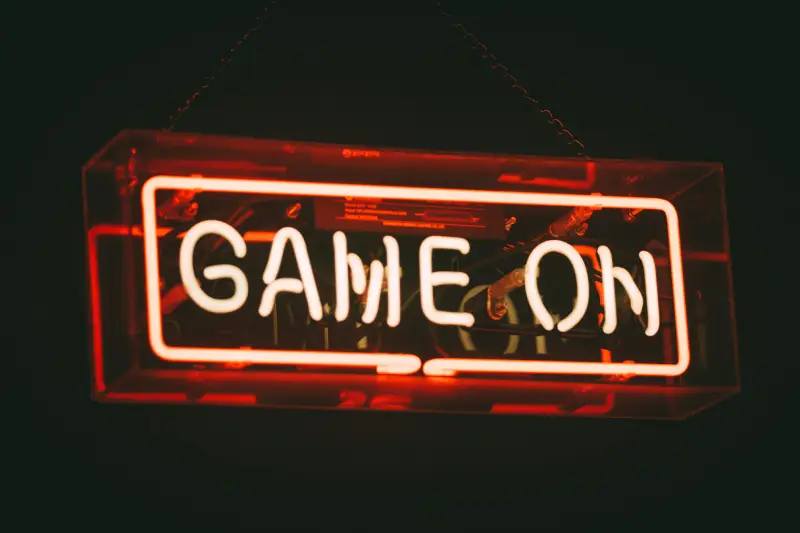
Walk down Colfax Avenue or through the RiNo Art District on a Thursday night, and you’ll see both: the warm, slightly buzzy glow of traditional glass neon above a cocktail bar, and the crisp, even wash of LED channel letters on the coffee shop two doors down. Both attract attention. Both communicate something about the brand behind them. When Denver business owners contact us about neon vs. LED signs, the conversation almost always starts the same way: which one actually makes more sense for my situation? The answer depends on your industry, your building, your climate, and your budget, and it’s rarely as simple as picking whichever one looks cooler.
What Is Traditional Neon Signage?
Traditional neon signs (technically called cold cathode signs) are made by heating and bending glass tubes, filling them with noble gases like neon or argon, and applying an electrical charge that makes the gas emit light. The red-orange glow most people think of as “neon” comes from actual neon gas. Blues, greens, and purples usually use argon combined with mercury vapor and a fluorescent phosphor coating on the inside of the tube.
The process is almost entirely handmade. A skilled glass bender shapes the tubes to match a design, then a technician seals and charges them. That craftsmanship is a big part of what makes real neon expensive, and it’s why the lead time for a custom glass neon sign in Denver typically runs four to eight weeks, compared to two to three for most LED alternatives.
How Glass Neon Signs Are Made
Each section of a neon sign is bent and sealed individually. Complex logos with tight curves or multiple colors need multiple tube sections, each handled separately and then wired together behind the sign face. The high-voltage transformer that drives the sign, typically 3,000 to 15,000 volts at very low amperage, is the most common failure point and the part most likely to need replacing over five years.
The Aesthetic Case for Real Neon in Denver
There are legitimate reasons to pick real neon in spite of the higher cost and maintenance. The light quality is genuinely different: slightly irregular, soft at the edges, warm in a way LED still struggles to replicate convincingly. For Denver businesses whose brand identity leans into authenticity, craft, or a specific era (a distillery, a vintage barber shop, a live music venue), the real thing reads as intentional rather than decorative. We’ve fabricated real neon for clients in the Highlands neighborhood where that warm, handmade quality was central to the brand story. It earned the premium there.
What Are LED Signs, and What Counts as “LED Neon”?
LED stands for light-emitting diode. In commercial signage, LED shows up in several distinct forms: backlit cabinet signs, LED message centers, illuminated channel letters where individual LEDs replace neon tube illumination inside the letter, and LED neon flex, a flexible strip product that mimics glass neon at much lower cost and complexity.
When most people ask about “LED neon,” they’re usually asking about the flex strip product rather than the broader LED category. Worth distinguishing, because they perform differently and suit different applications.
True LED Channel Letters vs. LED Neon Flex
LED channel letters are the illuminated dimensional letters you see on storefronts and retail centers across the Denver metro. Inside each fabricated metal letter, a row of LED modules provides the illumination. Exterior-grade, weather-tested, designed for 24/7 operation. LED neon flex is a flexible silicone product threaded through a backing channel to form shapes and letters. It’s mostly used for interior decorative work (behind a bar, on a photo wall, in a reception area) rather than primary exterior signage.
Why LED Dominates Commercial Signage Today
Across the commercial sign industry, LED has become the default illumination technology for one straightforward reason: the economics are consistently better over a five-to-seven-year ownership window. Energy consumption is 50 to 80 percent lower than comparable neon; lifespan runs 50,000 to 100,000 hours versus 8,000 to 15,000 for neon tubes, and repair (when needed) rarely requires a specialist. At Vision Visual, well over 90 percent of the illuminated exterior signs we fabricate today use LED technology for exactly these reasons.
Neon vs. LED Signs: A Side-by-Side Comparison
| Factor | Traditional Neon | LED Signs |
|---|---|---|
| Upfront cost | Higher, handmade fabrication | Lower to moderate, scalable production |
| Energy use | 3-5x more than the LED equivalent | Very efficient, low monthly operating cost |
| Lifespan | 8,000-15,000 hours | 50,000-100,000 hours |
| Maintenance | Requires a specialist glass bender | Standard electrical, easy module swap |
| Brightness control | Fixed, limited dimming | Fully dimmable, programmable |
| Weather performance (CO) | Vulnerable to temperature extremes and vibration | Sealed units, rated for Colorado climate ranges |
| Custom color range | Limited to gas/phosphor combinations | Full RGB spectrum available |
| Repair in Denver | Fewer specialists, longer lead time | Widely serviceable, fast turnaround |
What Denver’s Climate Does to Each Sign Type
Colorado’s climate creates significant performance conditions that don’t exist in most of the country. Denver averages 300 days of sunshine per year, putting it among the highest UV exposure markets in the United States. UV degrades certain plastics, adhesives, and coatings faster than in coastal or lower-altitude markets. Combine that with temperature swings that can hit 60°F in a single day on the Front Range (a January morning at 5°F and an afternoon at 55°F is normal), and you have thermal cycling that stresses materials aggressively.
For traditional neon, the glass tubes themselves handle temperature changes reasonably well. The transformers, connectors, and mounting hardware are more vulnerable. Denver’s hailstorms, which routinely produce hail large enough to dent car hoods, can crack exposed neon tubes on exterior installations, and replacement means calling a specialist. LED channel letters and cabinet signs have sealed housings and solid-state construction that handle thermal cycling and impact stress much better. Our installation crews have retrieved LED components after significant hail events that were still working.
Altitude plays a subtle role too. At 5,280 feet, reduced air density affects the cooling of electrical components. LED drivers are designed for it, but older or lower-quality neon transformers can run hotter and fail earlier at Denver elevations than the same unit would at sea level. Worth asking any sign company whether their electrical components are rated for high-altitude operation.
Which Sign Type Fits Your Denver Business?
Neither one is universally right. The better question is which technology serves your specific brand, location, and operational context.
When Neon Makes Sense
Real neon makes sense when the medium is part of the message. Bars, cocktail lounges, music venues, tattoo studios, vintage-forward boutiques, and independent restaurants with craft or heritage positioning tend to benefit from the distinctive quality of glass neon. The light does feel different (softer, warmer, slightly alive in a way LED flex hasn’t fully caught up to), and the customers who care about authenticity will notice. Budget for higher upfront cost and a longer production lead time, and have a plan for maintenance before you need it.
When Is an LED the Better Investment
LED is almost always right for exterior monument signs, channel letter sets, pole signs, retail fascia, and anything that needs to run reliably across Colorado’s climate for five or more years without specialist service calls. It’s also the practical choice for any business that needs to update messaging, control brightness based on ambient light, or manage long-term operating costs. Office buildings, medical practices, retail centers, auto dealers, and multi-tenant commercial properties are almost always better served by LED. For interior decorative applications where you want a neon aesthetic on a tighter budget, LED neon flex is a solid middle path.
The Cost Difference Between Neon and LED Signs in Denver
For a comparable exterior channel letter set (say, a two-foot-tall, eight-letter business name), a traditionally illuminated neon version typically costs 40 to 60 percent more to fabricate than the LED equivalent. The gap is labor: bending and sealing glass tubes takes significantly more skilled time than mounting LED modules inside a fabricated letter.
Over five years, the operating gap widens. A neon sign drawing 600 watts costs roughly $450 to $500 a year in electricity at Colorado’s average commercial rate of about $0.09 per kWh, running 16 hours a day. An LED equivalent drawing 120 watts runs around $90 to $95 a year under the same conditions. That’s a $350-plus annual difference, and it doesn’t account for the near-certainty of at least one service call on the neon unit during that window.
Can You Get the Neon Look with LED Technology?
Yes, and for most Denver applications, the result is good enough that customers don’t distinguish between the two at normal viewing distances. LED neon flex has improved a lot over the past five years. The silicone extrusion is softer and more uniform in cross-section than it used to be, and light diffusion now genuinely approximates the warm edge-glow of glass rather than producing the harsh point-source look of earlier flex products.
We’ve installed LED neon flex for several Denver restaurant and retail clients who wanted the neon aesthetic for interior brand environments (reception areas, feature walls, branded photo installations) at a fraction of the cost of real glass. For exterior, we still recommend LED channel letters over flex on weather and durability grounds, but for interior brand elements, the hybrid approach works well and opens up the neon look for businesses that couldn’t justify the glass price.
Frequently Asked Questions
Q: Is traditional neon still available for commercial signs in Denver?
A: Yes, traditional glass neon is still available, but the pool of skilled glass benders has shrunk considerably over the past two decades. Lead times for custom glass neon in Denver typically run four to eight weeks, and not every local sign company offers it. Vision Visual can source traditional neon fabrication for clients with specific brand requirements where the glass look is essential.
Q: How long do LED signs last compared to neon?
A: LED modules in a commercial sign are rated for 50,000 to 100,000 hours of operation, which translates to roughly 17 to 34 years at 8 hours per day. Traditional neon tubes typically last 8,000 to 15,000 hours before noticeable dimming or failure, about three to five years in continuous commercial use. The lifespan difference is one of the main financial arguments for LED in high-operating-hour environments.
Q: Are LED signs brighter than neon at high altitude?
A: Brightness output isn’t directly affected by altitude, but LED signs tend to hold more consistent brightness over time in Denver’s climate. Neon tube output can degrade faster under high-UV exposure and repeated temperature cycling, both of which Denver delivers year-round. LED signs with quality drivers and sealed housings tend to hold their rated output more consistently across Denver’s altitude and climate conditions.
Q: Which sign type is easier to repair in Colorado?
A: LED signs are significantly easier to repair here. Replacing an LED module or driver takes a technician with basic electrical skills and the correct replacement part, both widely available in Denver. Repairing a broken neon tube requires a glass bender, and there are fewer active glass benders in the Denver metro than there were twenty years ago. Sourcing custom-bent glass can add one to three weeks to a repair timeline.