
 (77 Ratings & Reviews)
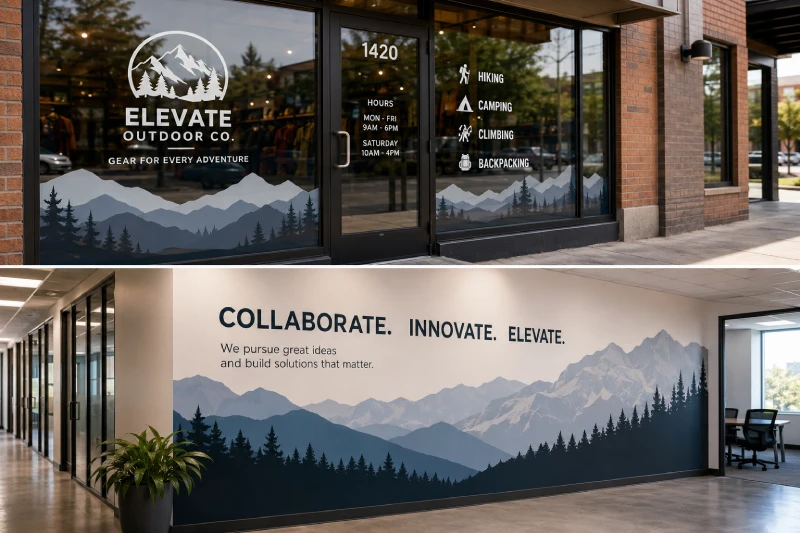
Vinyl is the most versatile material in commercial signage. The same fundamental product appears on windows, walls, floors, vehicles, doors, temporary signs, event graphics, and dozens of other applications. For Denver businesses, custom vinyl is often the most cost-effective sign solution for a specific need, and it is almost always the fastest to produce and install.
This guide covers what custom vinyl signs are, the main application categories for Denver businesses, and how to think about vinyl as part of a broader signage strategy. Whether you are refreshing your storefront windows, adding wall graphics to a new office, or getting your first service vehicle lettered, understanding what vinyl can do helps you brief the project correctly.
What Custom Vinyl Signs Are
Custom vinyl signs are graphics produced from adhesive vinyl film applied to a surface, like glass, wall, floor, vehicle, or a variety of substrates. The category divides into two fundamental types. Cut vinyl consists of individual letters or shapes cut from a solid-color vinyl sheet, weeded (excess vinyl removed from around the shapes), and applied to the surface with a transfer tape. The color is inherent in the vinyl material itself; there is no printing involved.
Printed vinyl is the opposite approach: a white or transparent vinyl substrate is digitally printed with a full-color image, typically protected with a laminate layer, and then either cut to shape or applied as a rectangular graphic. Printed vinyl handles photographic, illustrated, or multi-color designs that cut vinyl cannot produce.
The versatility of the category comes from the range of vinyl products available. Outdoor-rated cast vinyl with UV laminate for exterior applications. Indoor-only calendered vinyl for interior installations. Matte, gloss, satin, and specialty finishes. Translucent and frosted vinyls for window applications. Reflective vinyls for safety and low-light visibility. Anti-slip laminated vinyl for floor applications. Fabric-substrate vinyls for wall installations that need a fabric aesthetic. The right vinyl for a specific application is a technical choice a professional sign company makes based on the substrate, the environment, and the expected service life.
Window Vinyl: Storefront Graphics, Frosted Film, and Perforated Vinyl
Windows are the highest-value vinyl application surface for most retail and commercial businesses. Storefront windows face the street; they face the parking lot; they face the foot traffic that passes daily, and unlike almost any other advertising surface, they are visible without cost every day for years. Our detailed post on window graphics for Denver storefronts covers this application in depth.
Storefront Window Graphics and Lettering
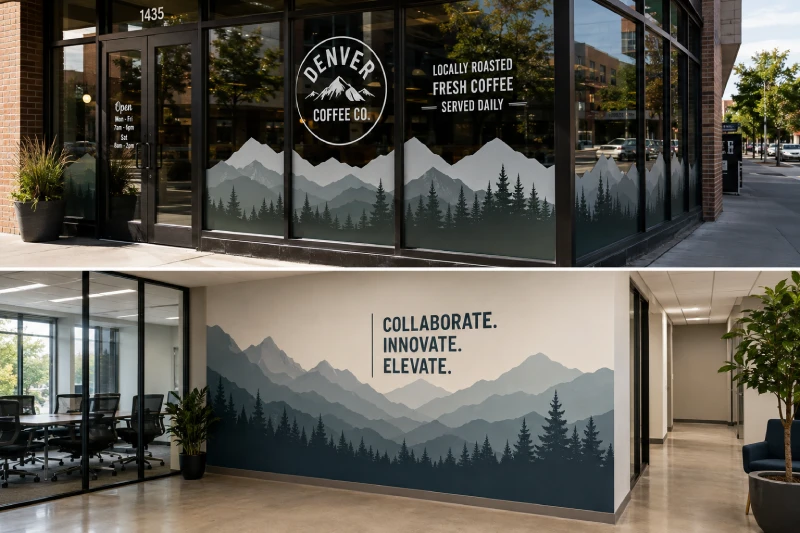
Cut vinyl lettering for hours, contact information, service listings, and address is the baseline vinyl application for any commercial storefront. It communicates a level of professionalism that a paper printout does not; it lasts years, and it costs a fraction of most other sign types. Printed vinyl extends the storefront window into a full advertising surface: promotional graphics, seasonal displays, product spotlights, and full-window murals. Application on the exterior of the glass produces the sharpest visual result; interior application is easier to clean around and protects the graphic from weather.
Frosted and Etched-Look Films
Frosted vinyl films create a sandblasted-glass aesthetic for privacy and branding without opaque coverage. Common applications in Denver commercial spaces include conference room glass walls, professional office reception areas, medical practice waiting rooms, and any environment where privacy and elegance need to combine. Frosted vinyl is available in solid opaque, patterned translucent, and custom-cut designs that can incorporate the business logo or branded pattern.
Perforated One-Way Window Vinyl
Perforated vinyl has thousands of small holes across its surface. The printed graphic reads solidly from outside while interior visibility is maintained through the perforations. This is the standard for full-window promotional graphics on retail storefronts, particularly for time-limited campaigns where full window coverage is appropriate for a season but not permanent installation.
Wall Vinyl: Murals, Brand Walls, and Environmental Graphics
Wall vinyl is the interior counterpart to storefront window vinyl. In Denver offices, retail environments, healthcare facilities, and hospitality properties, wall vinyl covers a wide range of applications: full-wall photographic and illustrated murals, brand walls featuring logo and mission statement installations, wayfinding and environmental graphics, and functional wall applications like dry-erase or magnetic-receptive vinyl that combines branding with usable surface.
The application principles are similar to window vinyl but with different substrate considerations. Smooth painted drywall is the ideal surface; textured walls need skim-coating first. Wall paint should be fully cured before vinyl application. The environmental conditions in commercial interiors mean wall vinyl typically lasts substantially longer than exterior applications, often the full length of a tenancy.
Floor Vinyl: Anti-Slip Decals and Directional Graphics
Floor vinyl is the most underutilized surface in commercial branding. Most Denver businesses ignore the floor as an advertising surface entirely, which means the businesses that use it stand out. Anti-slip laminated floor decals support a range of applications: logo placement at entrances, directional arrows in retail environments, product zone highlighting in grocery and specialty retail, wayfinding paths in healthcare and educational facilities, and social distancing markers where they remain in use.
Durability depends on foot traffic volume and cleaning contact. Smooth sealed concrete and tile surfaces give floor vinyl the longest lifespan. Textured or porous surfaces reduce adhesion. High-traffic entry zones typically need replacement more frequently than lower-traffic areas within the same installation.
Vehicle Vinyl: Lettering, Decals, and Partial Wraps
Vehicle vinyl is standard equipment for Denver trades, service businesses, and fleets, including HVAC contractors, plumbers, electricians, cleaning services, delivery operations, and construction service businesses across the metro area. The material is the same category as window and wall vinyl, but applied to vehicle sheet metal and glass. Our dedicated post on fleet graphics and vehicle wraps for Denver businesses covers this category in more depth.
Cut vinyl lettering is the entry-level option for professional vehicle identification. It looks clean, provides the essential contact information, and costs a fraction of a full wrap. Printed vinyl decals for logos, larger visual elements, and multi-color designs add visual impact at moderate cost. Partial wraps combine lettering and printed panels to create substantial visual coverage on the sides and rear of a vehicle without the cost of a full wrap. Full vehicle wraps are a distinct product category with their own considerations.
Working with a Denver Sign Company on Custom Vinyl Projects
A professional custom vinyl project starts with a design consultation that defines the scope and specifies the correct vinyl grade for the application. Outdoor exterior windows need outdoor-rated cast vinyl with UV laminate; interior wall murals can use different materials. Vehicle vinyl requires cast vinyl designed to conform to curved surfaces. The vinyl choice is a technical decision that affects both cost and longevity, and a professional sign company makes it based on the specifics of your project rather than treating all vinyl as interchangeable.
Artwork development runs from client-supplied files (ideally vector formats for clean scaling, like AI, EPS, or PDF) through the sign company’s creative services when clients don’t have designed artwork ready. Proof review before production is standard; approving the proof in writing prevents errors that would require reprinting.
Production is typically fast; most vinyl projects can be produced within a few business days of approved artwork. Installation requires trained installers who understand how to apply vinyl without bubbles, misalignment, or edge lifting. The application looks simple, but technique matters for a finished result that looks intentional rather than provisional. Request a quote with your project details to get pricing and a realistic timeline for your specific scope.
FAQ
- How long does vinyl signage last? – Vinyl signage lifespan varies by grade and application. Interior vinyl (walls, windows, floors in protected environments) lasts eight to twelve years or more. Exterior-grade vinyl with UV laminate applied to windows, doors, and vehicles typically lasts five to seven years in Denver conditions before fading or edge lifting becomes noticeable. Floor vinyl in high-traffic areas has a shorter effective lifespan due to abrasion and cleaning contact. Premium cast vinyl films significantly outlast economy alternatives.
- What is the difference between cut vinyl and printed vinyl? – Cut vinyl is a solid-color vinyl sheet from which individual letters or shapes are cut, weeded, and applied to a surface. The color is inherent in the vinyl material itself. Printed vinyl is a white or transparent vinyl substrate on which a full-color image is digitally printed and typically laminated. Cut vinyl is used for single-color lettering and logos; printed vinyl is used for photographic, illustrated, or multi-color graphics.
- Can vinyl signs be removed without damaging surfaces? – Professionally applied vinyl is designed for clean removal. Using heat and correct removal technique, quality vinyl releases from glass, painted drywall, vehicle paint, and most commercial surfaces without residue or damage. The variables are the specific vinyl grade, the substrate condition, and how long the vinyl has been installed. Vinyl left in place for more than eight to ten years may require more effort and solvent cleaning during removal.
- How much do custom vinyl signs cost in Denver? – Custom vinyl sign costs vary significantly by size, material, and application complexity. Simple cut vinyl window lettering for a business door might cost $100 to $300. A full-window perforated vinyl storefront graphic can run $600 to $1,500 or more depending on size. Wall vinyl murals range from $8 to $18 per square foot for standard designs. Vehicle vinyl lettering starts around $200 to $500. A detailed quote requires understanding the specific project scope.
- How long does it take to produce and install custom vinyl signs? – Custom vinyl signs are among the fastest sign products to produce. Simple cut vinyl lettering and standard graphics can typically be produced in one to three business days from approved artwork. Larger printed applications like wall murals and full-window graphics take three to five business days for production. Installation of most vinyl projects is completed in a few hours. The overall timeline from initial consultation to installed vinyl is typically one to two weeks.