
 (77 Ratings & Reviews)
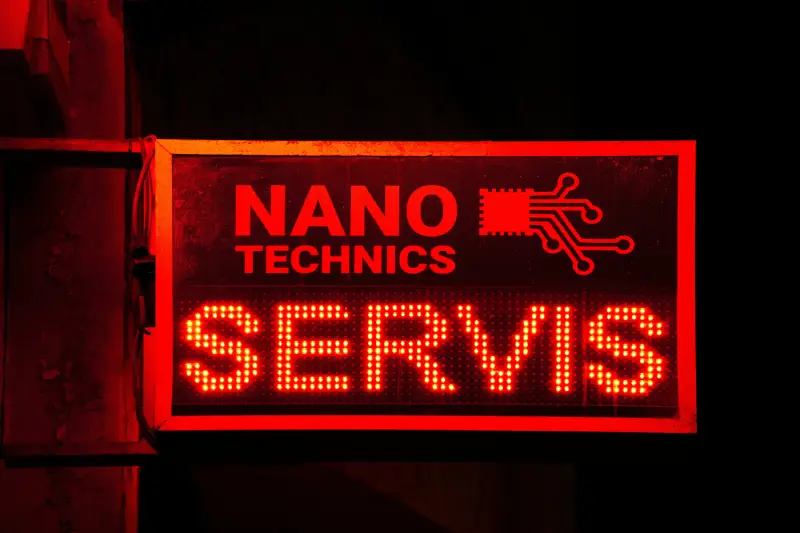
Before anyone talks to your team, shakes a hand, or sits down in a conference room, your lobby has already communicated something. In Denver’s tech sector, which has grown significantly across the LoDo, RiNo, and DTC corridors over the past decade, that first impression carries real weight. Lobby signs for tech companies have moved well past a logo on a wall. They’re doing brand communication, talent attraction, investor signaling, and company culture in physical form. Getting the design and execution right takes thinking about what the lobby actually needs to accomplish, not just what looks good in a render.
Why Denver Tech Companies Treat Lobby Signage as a Brand Asset
The competition for engineering and product talent in Denver is real. Companies recruiting in the same candidate pool as remote-first competitors know that the physical workspace experience affects offer acceptance rates. When a candidate walks into your lobby for a final-round interview, the quality and intentionality of that space tell them something about how the company thinks about design, investment, and its own brand. A generic printed banner or a peel-and-stick logo on a bare wall is a data point, and not a favorable one.
The investor dynamic works the same way. Denver’s venture activity has picked up substantially, and early-stage companies hosting investor walkthroughs at their office understand that every detail shapes perception. A well-fabricated lobby sign says that the team sweats the details. An afterthought says the opposite. We’ve worked with Denver startups on modest budgets who still made smart choices, usually because they understood what the sign needed to communicate rather than just how it needed to look.
There’s a functional argument too. In multi-tenant office buildings, common in LoDo and the DTC, a clear, well-mounted lobby sign helps visitors confirm they’re in the right place before they get to reception. Small convenience, measurable effect on guest experience.
The Most Popular Lobby Sign Types for Tech Offices
The right choice depends on your wall surface, ceiling height, lighting conditions, and brand aesthetic. These are the types we fabricate most often for Denver’s tech sector.
Dimensional Metal Letters and Logos
Fabricated from aluminum or stainless steel, dimensional letters are the most durable and permanent lobby sign option. They can be surface-mounted flush against a wall or set on standoffs to create a shadow gap that gives the letters visual depth. Brushed aluminum finishes are common with enterprise software and fintech companies. Painted powder-coat finishes let you match brand colors precisely. These signs photograph well, hold their appearance for decades, and send a signal of permanence that suits companies positioning themselves as established rather than provisional.
Backlit and Halo-Lit Acrylic Signs
Backlit signs put LED illumination behind a translucent acrylic face for an even glow across the whole sign. Halo-lit versions mount the sign off the wall and direct light backward, so the letters or logo appear surrounded by an ambient halo of light. Both work well in tech office lobbies because they hold up in low-ambient-light environments and create a visual focal point without needing significant natural light. Particularly effective in the interior corridors of office buildings where window light doesn’t reach reception.
Frosted Glass and Vinyl Window Applications
For companies in open-plan offices where the lobby transitions directly into workspace, frosted glass panels or vinyl window graphics on glass walls do double duty: they add visual separation and privacy while carrying brand identity. Cut vinyl in a frosted or brushed finish can apply any logo or wordmark to glass surfaces at a fraction of the cost of etched glass, and it can be swapped when a rebrand happens without replacing the glass.
Digital Display Panels for Dynamic Content
Some Denver tech companies (particularly those in developer tools, media, or SaaS with real-time data they want to showcase) use digital display panels as a lobby element. A screen mounted behind a branded housing can cycle between the company logo, live product metrics, social proof, or investor partnership logos. This works when the dynamic content is genuinely interesting rather than decorative, and when the overall lobby design is modern enough to absorb the technology without looking like a showroom.
Material Options and What Each Says About Your Brand
Material choice in lobby signage is a branding decision, not just a fabrication one. The table below maps common materials to the brand signal they tend to send.
| Material | Brand Signal | Best For | Maintenance |
|---|---|---|---|
| Brushed aluminum | Precision, enterprise, established | Series B+ companies, fintech, infrastructure SaaS | Minimal, wipe clean |
| Painted acrylic | Approachable, energetic, startup | Early-stage, consumer-facing, creative teams | Low, dust occasionally |
| Backlit acrylic | Premium, modern, design-forward | Design tools, media, premium SaaS | LED module check every 5 years |
| Raw wood + metal | Values-forward, craft, community | Benefit corps, HR/culture software, B2B agencies | Occasional conditioning |
| Frosted vinyl on glass | Clean, minimal, flexible | Open-plan offices, shared suites, interim spaces | Very low, peel and replace |
ADA Compliance in Denver Tech Office Lobbies
ADA (the Americans with Disabilities Act) imposes specific requirements on signage in commercial spaces open to the public, and most tech office lobbies qualify. Title III applies to places of public accommodation, which include most businesses that receive clients, customers, or job applicants. The requirements that affect lobby signage most directly are the ones covering room identification signs. Any sign that identifies a permanent room or space has to meet standards for character size, finish contrast, and mounting height, and in many cases has to include raised tactile lettering and Grade 2 Braille.
The typical lobby sign, a company logo or name on the reception wall, isn’t itself a room identification sign and doesn’t trigger Braille requirements. But suite entry signs, conference room signs, and directional signs within the lobby do. We handle ADA compliance as part of sign permitting work for Denver clients, and we recommend discussing it at the start of any office lobby project rather than treating it as an afterthought. Retrofitting after an inspection flag is more expensive than building it in from the start.
Lobby Sign Design Trends in Denver’s Tech Sector (2025-2026)
The aesthetic in Denver tech lobbies has shifted noticeably over the past two years. The heavily branded, logo-everything environments of the mid-2010s startup era have given way to something more restrained. A few patterns show up consistently in the projects we’re seeing.
Minimal wordmarks over complex logos. A lot of Denver tech companies have simplified their visual identity through rebrands, and the lobby signs reflect this. Clean wordmarks in a single weight of a strong typeface have replaced the layered logomarks that were popular five years ago. The result works better at various sizes and lighting conditions and ages more gracefully.
Dark-mode aesthetics in physical space. The dark backgrounds and high-contrast type that dominate developer tool UIs have crossed into physical environments. Charcoal or near-black wall paint behind a polished metal or backlit sign creates a dramatic contrast that photographs well and holds up over time. Several Denver tech companies in the developer infrastructure space have gone this direction.
Multi-material combinations. Single-material signs feel dated next to combinations: metal letters mounted on a wood slat backing, acrylic faces with metal standoffs, backlit elements built into dimensional architectural panels. The complexity reads as craft and attention to detail without needing a huge footprint.
How to Brief a Sign Company on Your Lobby Sign Project
The quality of a lobby sign outcome is directly tied to the quality of the brief you provide at the start. Companies that come to us with clear brand files, wall dimensions, and a sense of the impression they want to make consistently get better results faster than those who arrive with a vague directive to “make something that looks professional.”
Before contacting a sign company, have these ready: your logo in vector format (AI or EPS preferred, SVG acceptable), your brand color specs in Pantone and CMYK, dimensions of the wall where the sign will be mounted including ceiling height and any obstructions like sprinkler heads or HVAC vents, a photo of the current wall and lobby environment, and any lease restrictions from your building management around mounting methods. A lot of Denver office buildings prohibit penetration into exterior concrete or restrict mounting hardware to specific types.
For a standard-complexity lobby sign (dimensional letters or backlit acrylic on standard drywall), production and installation from approved proof to installed sign typically runs two to three weeks in Denver. More complex projects with multiple materials, custom fabrication, or building permit requirements take longer. Plan accordingly if you have a hard event date.