
 (77 Ratings & Reviews)

Most Denver business owners picture sign replacement as a simple swap. The old sign comes down, the new one goes up, and the storefront looks better by Friday. In practice, sign replacement for a Denver business is a chain of decisions about permits, landlord approval, fabrication lead times, wall repair, and how the building will identify itself while the work happens. The projects that run smoothly are the ones where those decisions were made before the first quote request. This guide covers what to settle first, how the process unfolds from removal to installation, and where schedules and budgets tend to slip.
A sign replacement project is the planned removal of an existing business sign and the installation of a new one, including permit review, landlord approval, fabrication, wall or fascia repair, and final inspection.
When Does a Sign Actually Need to Be Replaced?
Repair is the right answer more often than most owners expect, which is why the first step in sign replacement planning is a diagnosis, not a purchase. A failed power supply, a handful of dark LED modules, or a cracked face can usually be fixed for far less than a new sign costs. Sign replacement makes sense when the problem is structural or when the sign no longer does its job: a cabinet that has taken on water, a frame rusted through at the mounting points, faces so faded that the colors no longer match your brand, or a sign built around fluorescent or neon lighting that has become hard to service. A rebrand or a change of business name settles the question on its own, and Denver business sign replacement often starts exactly there.
Signs That Can Be Repaired vs. Signs That Need Full Replacement
A useful test is to ask what a repair would actually fix. If a technician can restore full function and appearance, repair wins. If the same sign will need attention again within a year, or the fix leaves new modules sitting behind faded faces, you end up paying twice. A visit from a sign maintenance and repair technician is a sensible first step, because the person who opens the sign can tell you which category it falls into before you commit to a larger project.
How Denver’s Climate Accelerates Sign Deterioration
Denver is hard on signs. Strong sun at altitude fades vinyl and plastic faces. Large daily temperature swings work mounting hardware loose and stress the seals that keep moisture out of cabinets. Hail dents and cracks faces, and dry winter air can make some adhesives and gaskets brittle. A sign that looks fine from the sidewalk may have a failing seal or corroded fasteners that only show up when someone opens it. Signs installed a decade or more ago also predate today’s LED standards, which is why so many sign replacement projects begin with the sentence “the lighting keeps failing.”
Decisions to Make Before You Contact a Sign Company
The first decision is whether you are replacing like for like or changing the design, size, or type of sign. A like-for-like swap on an existing structure is the simplest path. A larger sign, a new position on the building, or a switch from a lit cabinet to channel letters changes the permit picture and may change what the wall or fascia needs behind it.
Permits come next. Changes to size, height, lighting, or position generally trigger a new sign permit review under Denver’s zoning rules, and even a like-for-like swap can need a permit depending on the sign and the zone district. Do not assume either way. Ask your contractor to confirm before design work starts, and look at how sign permitting in Denver fits into the scope you are buying.
If you lease your space, your landlord or property manager usually has a say. Many properties publish sign criteria covering approved locations, colors, lighting, and who may perform the work, and some require a certificate of insurance from the contractor. Get those rules in writing before you approve any design. A design rejected after fabrication is the most expensive mistake in this category, because the sign is already built.
How the Sign Replacement Process Works, Step by Step
The sequence is consistent from one project to the next, even though the details change with the sign type. Four stages carry most of the schedule.
Site Assessment and Permit Research
The contractor measures and photographs the existing sign, inspects the mounting surface, locates power, and notes access issues such as overhead lines, sidewalk traffic, or a second-story location. The visit should also answer whether the structure behind the sign can be reused. A good assessment ends with a written scope that states what is coming down, what is going up, and what happens to the wall afterward.
Fabrication Lead Times to Plan Around
Fabrication for a sign replacement usually runs while the permit is in review, so the two clocks overlap. Simple signs can be ready quickly. Custom lit signs, large channel letter sets, and anything that needs engineering take longer, and permit review often ends up setting the real schedule. Ask for the fabrication estimate and the permit estimate separately, and add a buffer if the replacement is tied to a grand opening, a lease deadline, or a rebrand announcement.
Removal Day: What Happens to the Old Sign
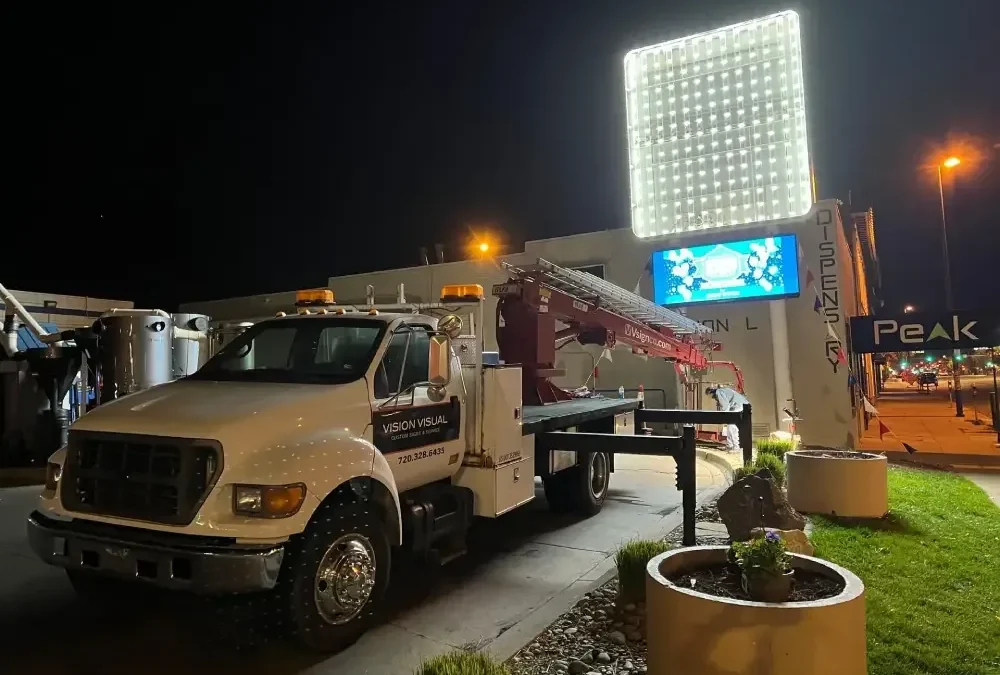
Removal is often scheduled close to installation so the building is not without a sign for long. The crew disconnects power at the source, takes down the sign and its hardware, and deals with what is behind it: capped wiring, anchor holes, and the pale outline where sun-faded paint stops. High or heavy signs call for lift equipment, which is where a bucket truck and crane service comes in.
Settle two questions in writing before the crew arrives. Who disposes of the old sign, and does any part of it, such as a cabinet, a pole, or a monument base, stay in service?
Installation and Inspection
The new sign mounts to the repaired surface and is wired by a qualified electrician where required. Lit signs should be checked after dark, because brightness and evenness are hard to judge in daylight. Permitted signs may need an inspection before the job is closed out.
A professional sign installation ends with paperwork as well as a working sign. Keep the permit sign-off, product documentation, and warranty information in one place. Vision Visual is MET listed to UL 48, the safety standard for electric signs, and its crews are OSHA-trained, so ask any contractor you consider for the equivalent.
Budgeting for a Sign Replacement Project in Denver
Fabrication is the headline number in any sign replacement quote, but it is rarely the whole bill. The table below lists the line items that decide the final cost and flags the ones that tend to go missing from a low quote.
| Cost item | What it covers | Often missing from low quotes? |
| Fabrication | The new sign itself, including lighting and finish | No |
| Permit and drawings | Application fees, site plan, engineered drawings if required | Often |
| Removal and disposal | Taking down the old sign and hauling it away | Sometimes |
| Wall or fascia repair | Patching anchor holes, repainting, restoring the surface | Often |
| Electrical work | New circuits, disconnects, timers, or photocell controls | Sometimes |
| Lift or crane time | Equipment for high or heavy signs | Sometimes |
| Installation and inspection | Crew time, sign-off, warranty paperwork | No |
Published price ranges for signs are unreliable, because size, lighting, structure, and site access move the number more than the sign type does. A site visit is the only way to get a sign replacement quote you can compare. Ask every contractor to price the same scope and to list what is excluded.
One question can change the budget entirely: does the sign need replacing, or only its lighting? If the cabinet and structure are sound, an LED retrofit on a sign still running fluorescent or neon tubes can deliver much of the benefit for less than a new sign. If you are replacing, browsing outdoor entrance and storefront sign projects gives you a realistic sense of the options for your building.
How to Minimize Business Disruption During Replacement
Schedule the sign replacement around your busiest hours and around Colorado weather. High work gets postponed for wind, and spring storms can shift an installation date by days, so avoid booking the install for the week of a promotion you cannot move.
If the building will be without a sign for any stretch during the sign replacement, plan a temporary solution. A banner or window vinyl can cover the gap, but temporary signs have their own rules from the city and from landlords, so confirm both. Tell customers directly as well. Update your Google Business Profile photos and hours, post on your social channels, and put a notice on the door if the entrance changes.

Questions to Ask Your Denver Sign Contractor Before You Sign
Before you approve a contract, get clear answers to a short list. Who pulls the permit, and what does that cost? Are removal and disposal of the old sign included? Who repairs the wall or fascia afterward? Does the installation crew work for the company or for a subcontractor? What insurance covers the work on your property? What does the warranty cover on the sign and on the installation? How is the sign checked after dark? A contractor who answers these without hesitation has handled commercial sign replacement in Denver before. Vision Visual handles design, fabrication, and installation under one roof, and you can start the conversation through the request a quote page.
Frequently Asked Questions
- How long does a commercial sign replacement take in Denver? – Most commercial sign replacements take several weeks from approved design to installed sign, and permit review often sets the schedule. Simple like-for-like swaps move faster, while custom lit signs and engineered structures take longer. Ask your contractor for separate fabrication and permit estimates so you can plan around the longer of the two.
- Who is responsible for removing the old sign? – The sign company usually handles removal as part of the replacement scope, but it should be written into the quote. Confirm who disposes of the old sign, who repairs the wall, and whether any part of the old structure stays. If you lease, check whether your landlord requires a specific removal standard.
- Do I need a new permit if I’m replacing a sign in the same location? – Often yes, depending on what changes. A new size, height, lighting method, or position typically requires a permit review, and a like-for-like swap can still need one depending on the zone district. Your contractor can confirm the requirement for your address before design work begins.
- Will my landlord need to approve the replacement sign? – In most leases, yes. Landlords commonly set sign criteria covering location, size, colors, lighting, and installer requirements. Get the criteria and the approval in writing before fabrication begins.
- What happens to the wall after the old sign is removed? – The wall keeps the evidence: anchor holes, capped wiring, and often a pale outline where the sign blocked the sun. Patching and repainting should be priced into the project rather than treated as a surprise. Ask your contractor whether wall repair is included or handled separately.