
 (77 Ratings & Reviews)
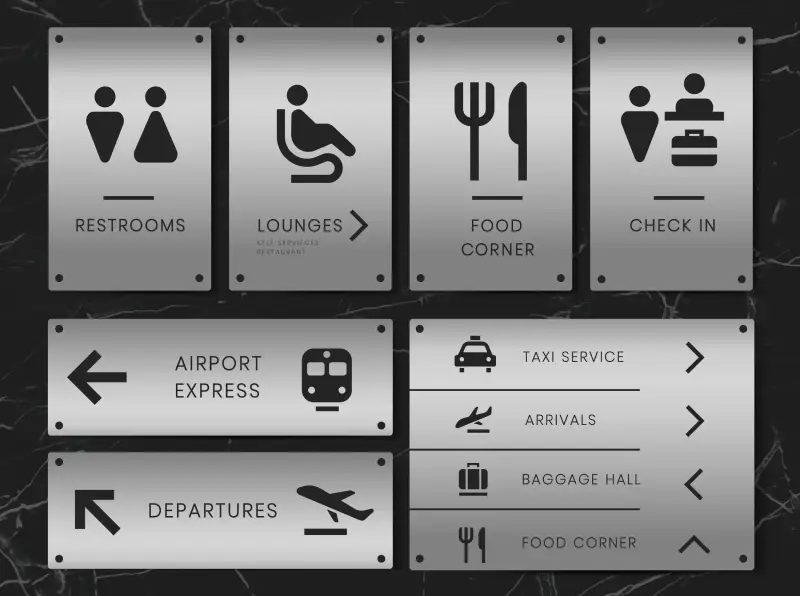
When customers pull into a Denver office park or multi-tenant shopping center, the first question is often: where do I go? Wayfinding signage provides the answer, guiding visitors through lobbies, down corridors, up stairwells, and into the right suite. For property managers and business owners, wayfinding signs do more than reduce confusion. They shape how visitors experience your building, reinforce your brand identity, and demonstrate that you care about user experience. This guide covers what wayfinding signage is, how to design it effectively, the types that work best for Denver commercial buildings, and how to ensure your system is accessible to everyone.
What Is a Wayfinding Sign (And Why It Matters)
Wayfinding signage is any system of signs, markers, and visual cues designed to help people navigate a space. The term comes from the idea of “finding your way” through an unfamiliar environment. Unlike standalone directional signs that simply point left or right, a true wayfinding system is cohesive, hierarchical, and strategically placed to guide visitors through a complete journey.
Wayfinding matters because people make snap decisions about whether they trust a space based on how easily they can navigate it. Research shows that unclear navigation creates frustration and anxiety. In a commercial building context, that anxiety translates to a bad impression of your business. Visitors may assume disorganization, lack of professionalism, or poor management. By contrast, clear wayfinding signals confidence and care. It shows that you thought about the customer experience.
Wayfinding vs. Directional Signs: Understanding the Difference
People often use the terms “wayfinding,” “directional,” and “wayfinder” interchangeably, but they have distinct meanings in the signage industry.
A directional sign is a single, simple sign that points to one location (e.g., “Conference Room 301 → This Way”). A wayfinder sign is a sign that shows multiple destinations at once (e.g., a main lobby sign listing “Restrooms, Elevator, Reception, Parking”). Wayfinding signage, by contrast, refers to the entire integrated system: the combination of monument signs, interior directories, floor markers, exit signage, parking wayfinders, and any other visual element that helps navigate the space. A wayfinding system works because each sign reinforces the others.
Design Principles for Effective Wayfinding in Denver Buildings
The best wayfinding systems share a few core principles, whether they are in a high-rise office tower downtown, a multi-tenant medical complex on the south side, or a suburban office park in Littleton.
Color and Visual Hierarchy
Color is the fastest way to convey information. A wayfinding system typically uses a limited color palette to create hierarchy. For example, directional signs for main destinations might use one color, secondary areas another. Contrast is critical. A sign that blends into its background does no good. The most effective wayfinding systems use high-contrast color combinations (dark text on light backgrounds, or vice versa) that remain legible from a distance and in various lighting conditions.
Typography and Readability
Font choice affects readability as much as it affects brand perception. Sans-serif fonts (like Arial or Helvetica) are the standard for wayfinding because they are clean and highly legible at a distance. Font size matters too. A sign 10 feet away should have letters at least 1 inch tall to be comfortably readable. In accessible wayfinding systems, font size scales further: a sign 20 feet away needs 2-inch letters or larger.
Consistent Placement and Spacing
Effective wayfinding repeats information at logical intervals. A visitor should never feel lost between signs. This typically means placing directional signage at every decision point; every corner, intersection, or major direction change. Consistency in mounting height, style, and material across the entire system reinforces the sense of intentional design. A hotel with mismatched sign styles and random heights feels chaotic, even if the directions are correct.
Types of Wayfinding Signage for Commercial Properties
Commercial buildings typically use multiple types of wayfinding signage in concert. Here are the most common.
Monument and Ground-Level Signs
Monument signs sit at ground level near the entry to a property and list the primary tenants or destinations (e.g., “Medical Plaza – Dr. Smith / Dr. Johnson / Therapy Suite 200”). They serve as the first wayfinding tool visitors encounter. In Denver, where many commercial properties sit back from the street, a clear monument sign is essential for initial orientation.
Interior Directional Signage
Interior signs include lobby directories, corridor signs, floor markers, and suite markers. Lobby directories are particularly important in multi-tenant buildings. They immediately tell visitors where their destination is and which direction to go. Corridor signs reinforce this by reiterating directions at each turn. Floor markers (typically floor-mounted or wall-mounted near elevator exits) orient visitors as soon as they exit onto a new level.
Digital and Interactive Wayfinding
Many modern commercial properties now include digital directory kiosks or interactive maps. These work especially well in large, complex buildings or mixed-use properties where the layout is not intuitive. Digital wayfinding also allows for real-time updates; if an office moves, the digital directory updates immediately without replacing physical signage.
Wayfinding in Specialized Environments
While most commercial buildings follow similar wayfinding principles, some environments have unique requirements. Hospital wayfinding signs, for example, must account for visitors who are stressed, disoriented, or unfamiliar with medical terminology. National park wayfinding signs must survive harsh outdoor conditions and guide visitors with varying levels of literacy. Office parks and business centers focus on suite numbers and company names. Understanding your specific context helps you design a system that actually works for your users.
ADA Compliance and Accessibility
In the United States, the Americans with Disabilities Act (ADA) mandates specific requirements for wayfinding signage. All directional signs must include Braille and tactile elements so that visitors with visual impairments can navigate independently. This is not an afterthought or nice-to-have; it is a legal requirement for any commercial building open to the public.
Beyond Braille, effective accessible wayfinding considers color contrast ratios, character size, mounting heights, and font selection. The goal is true universal design: a system that works intuitively for everyone, not just a system that technically complies with minimum standards. A wayfinding system that anticipates user needs, whether someone is blind, deaf, using a wheelchair, or simply in a hurry, is a system that works for everyone.

Planning Your Denver Wayfinding Signage System
Before you order directional signs for your property, invest time in planning. Start by mapping the actual visitor journey. Where do people enter? What are their first decision points? What destinations do they seek? Then, identify gaps in your current signage. A property audit often reveals surprising oversights: no sign marking the elevator, no clear restroom direction, no parking wayfinder.
Next, define your design standards. What colors, fonts, and materials align with your brand? How will your indoor and outdoor signage relate? What is your budget for a complete system? Working with a sign company experienced in commercial wayfinding (rather than simply ordering individual signs) ensures that every piece works together as intended.
Getting Started with Vision Visual Signs
Vision Visual Signs has designed and installed wayfinding systems across Denver and the broader metro area. From initial site assessment through final installation, we handle the complete process. If you are ready to improve navigation and visitor experience at your Denver commercial property, contact us for a consultation or request a wayfinding signage quote.
Frequently Asked Questions About Wayfinding Signage
What is the difference between wayfinding and directional signs?
- A directional sign points to a single destination. A wayfinder sign shows multiple destinations. Wayfinding is the complete system that integrates all of these signs into one cohesive navigation experience.
Why are wayfinding signs important for commercial buildings?
- Clear wayfinding reduces visitor confusion and anxiety, reinforces your brand, improves the customer experience, and demonstrates professionalism. Buildings without an effective wayfinding are perceived as disorganized or poorly managed.
What is ADA compliance for wayfinding signs?
- The ADA requires that all directional signs in public buildings include Braille, tactile characters, and high-contrast colors so that visitors with visual impairments can navigate independently. Font size and mounting height are also regulated.
What are the best materials for outdoor wayfinding signs in Denver?
- Aluminum is the most durable choice for Denver’s climate. It resists corrosion, handles temperature swings, and maintains legibility through intense UV exposure. Acrylic faces and weather-sealed finishes extend lifespan further.
How long does it take to design and install a wayfinding system?
- A typical commercial wayfinding project takes six to twelve weeks from initial consultation through final installation. Complex multi-building systems may take longer. The timeline includes site assessment, design development, fabrication, permitting, and installation.
Directories are the anchor of any wayfinding system, and our guide to office building directory signs covers formats, ADA rules and update options.